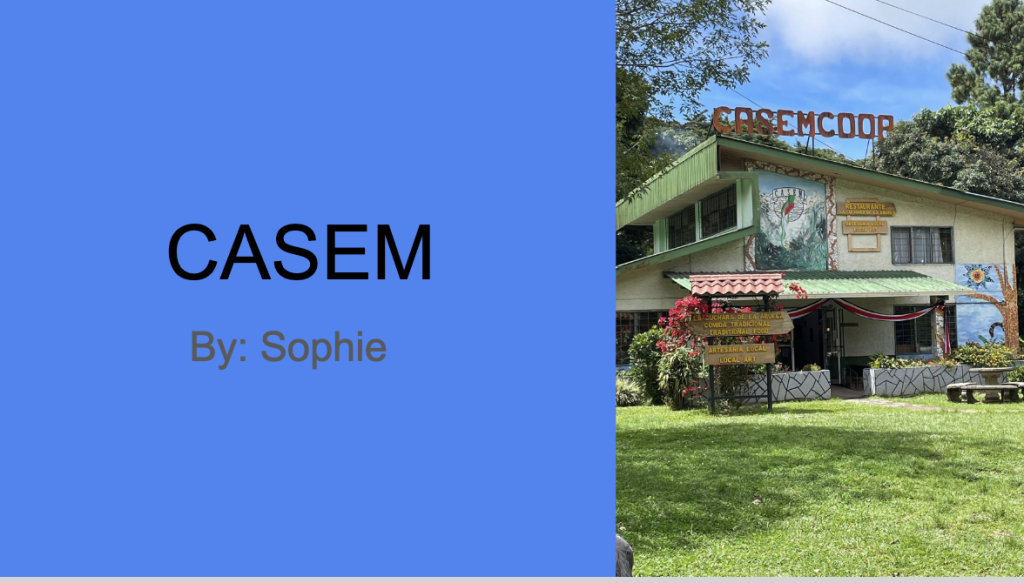
The local gelato place in Monteverde is called El Camino Gelato. They make delicious gelato in all kinds of flavors including: birthday cake, banana chocolate, orange chocolate, mango and passionfruit, and more!
Gelato is kind of like ice cream except:
Gelato is made with more milk and less cream.
Gelato has no eggs while ice cream has egg yolks.
Gelato is served at −10°C (14°F) and while ice cream is served colder, at −12°C (10°F)
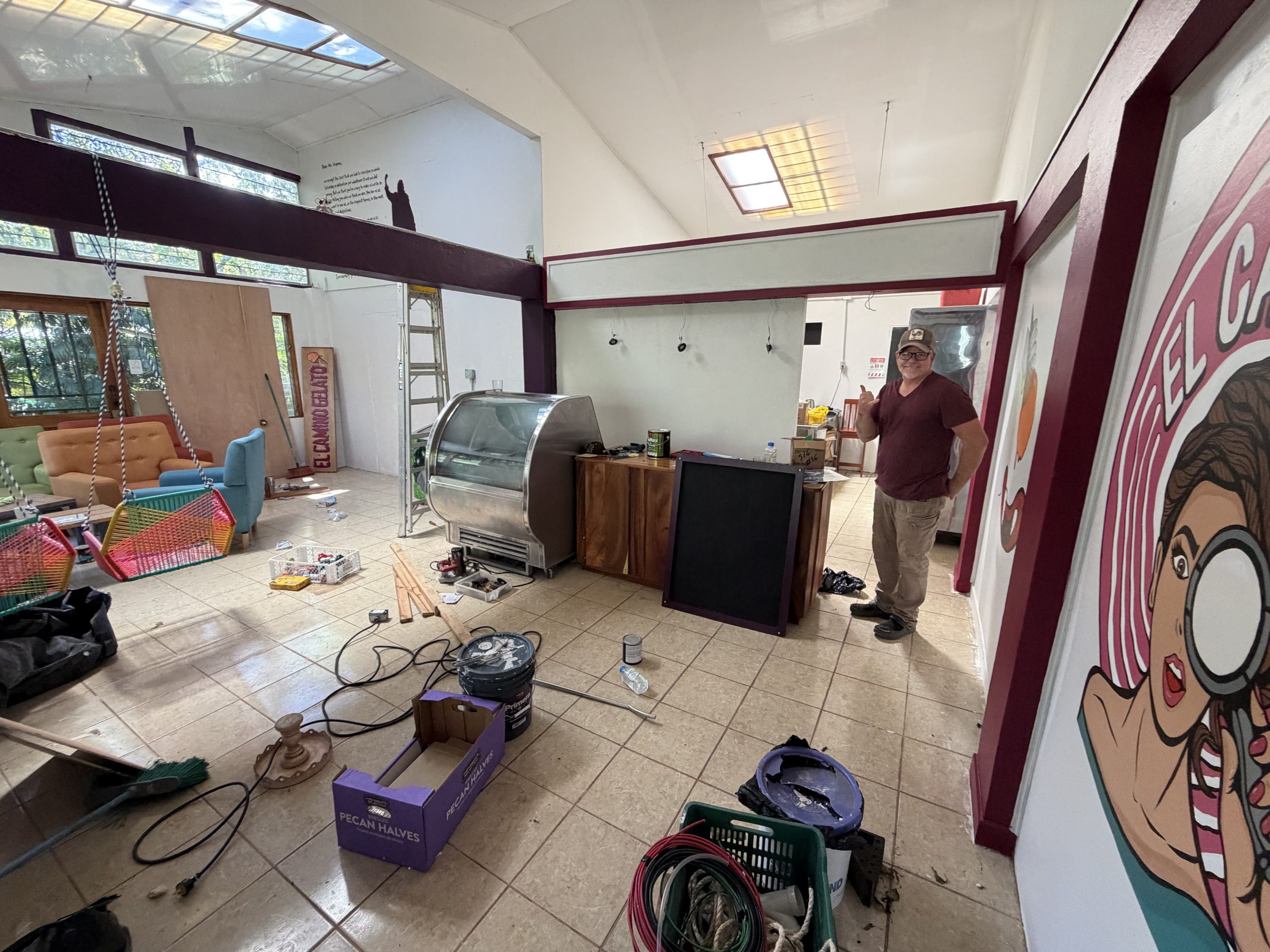
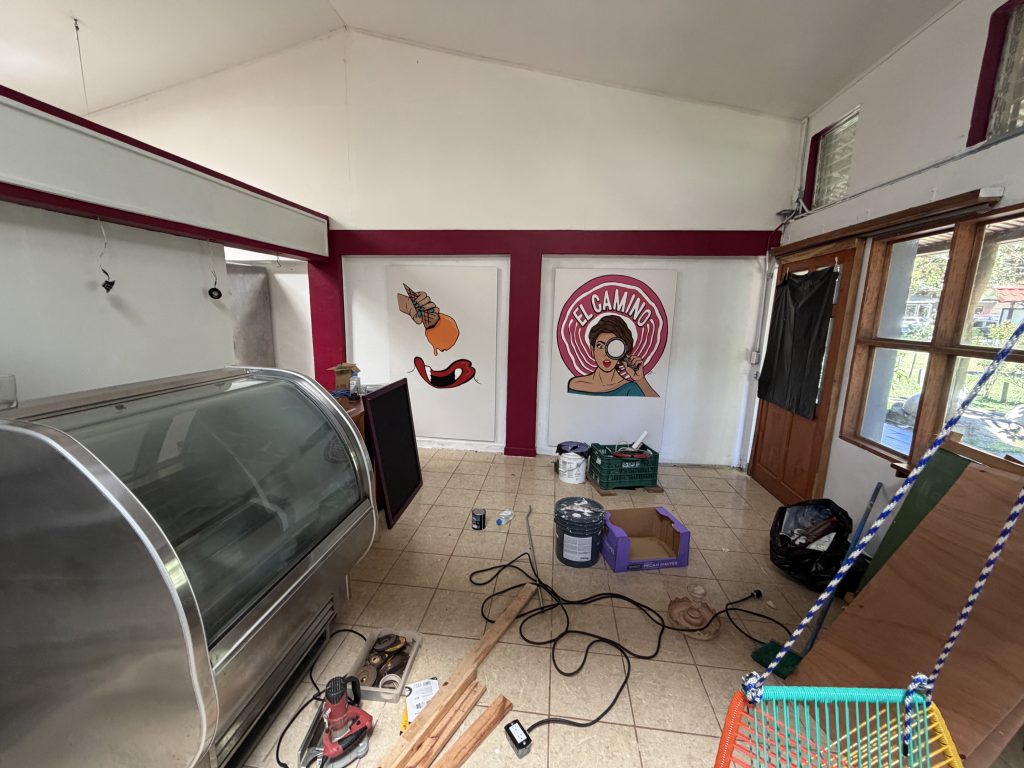
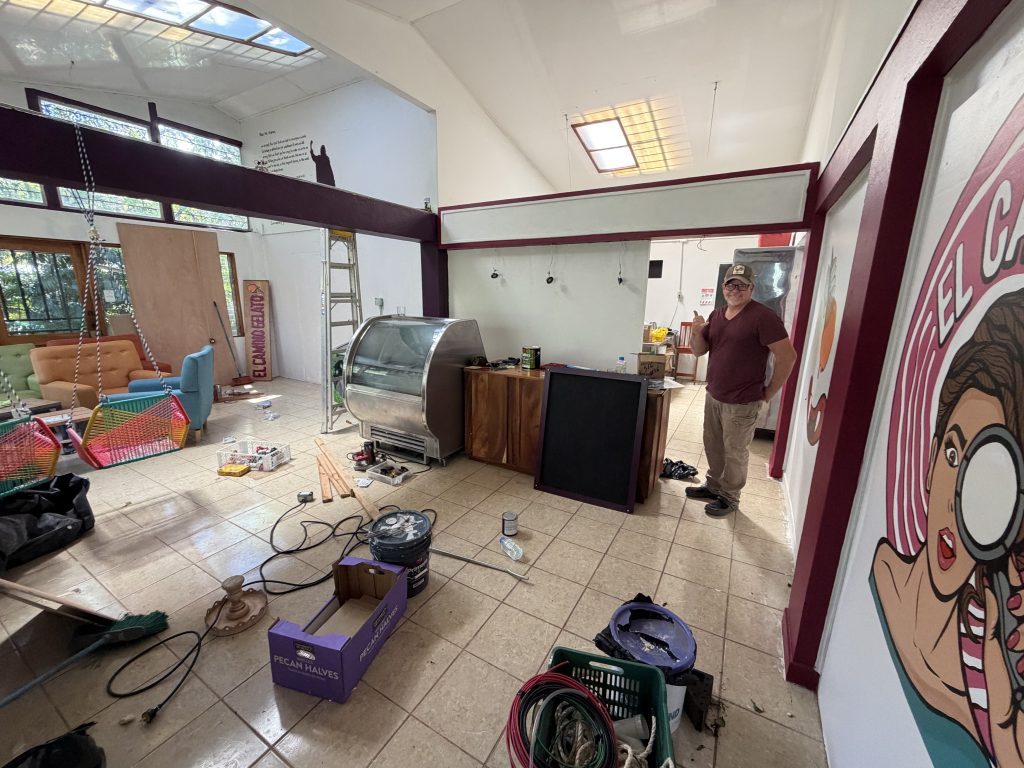
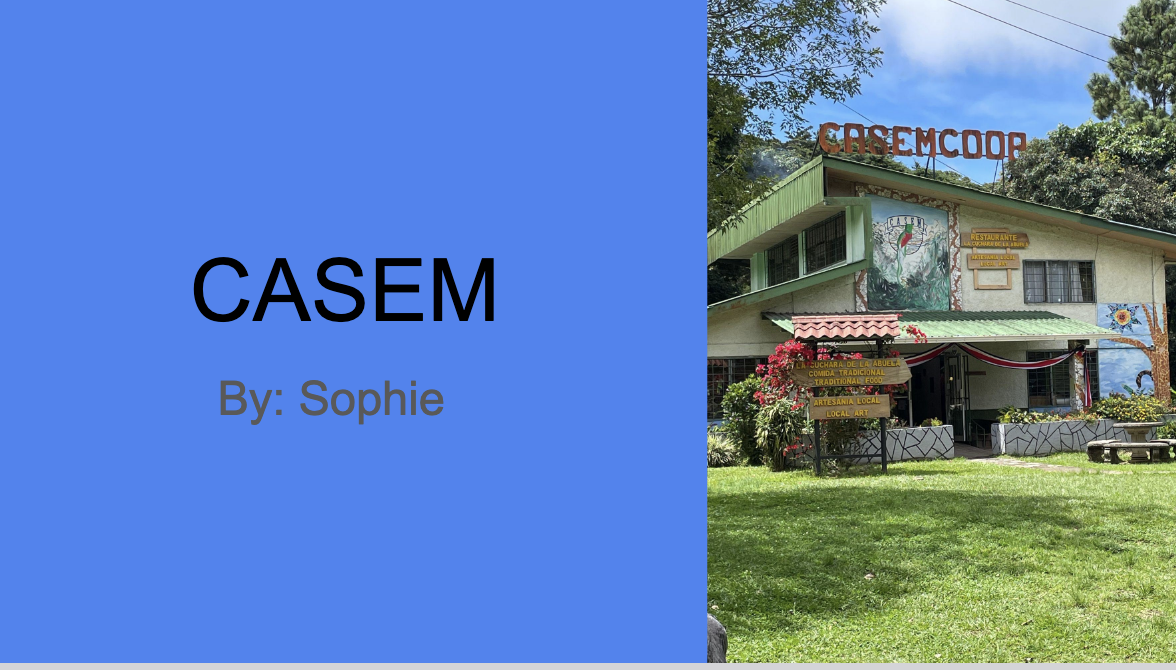
El Camino Gelato has two stores: one in Santa Elena (which is new) and one in Monteverde. The one in Monteverde is changing location to move into a storefront at CASEM.
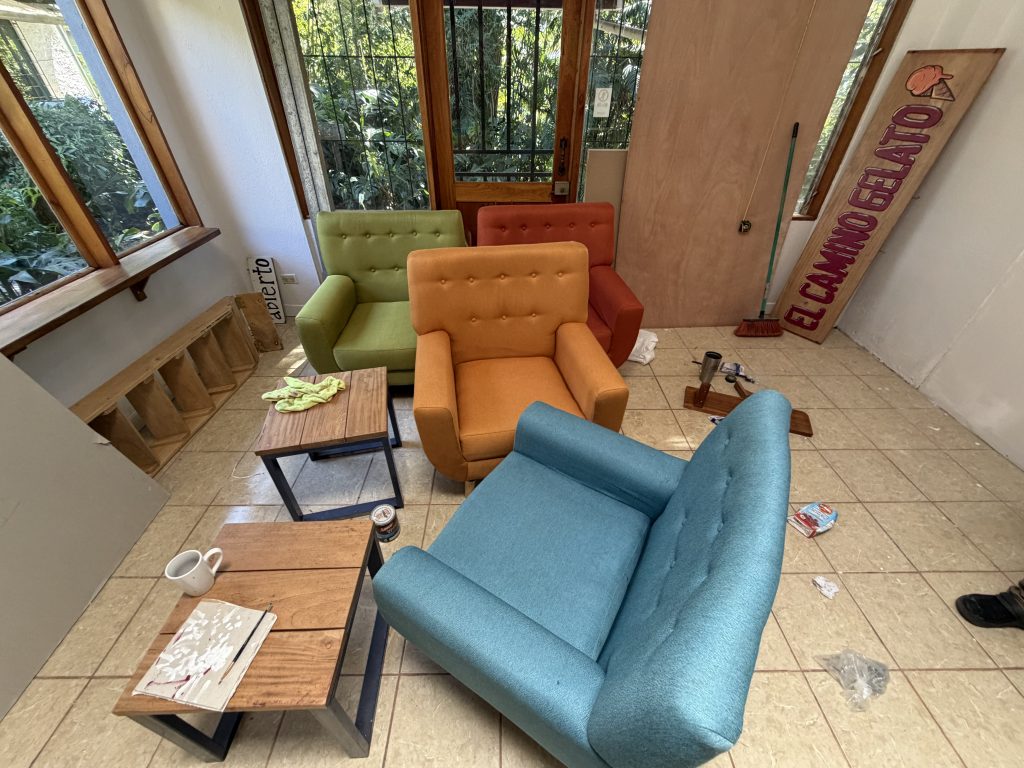
Here are some sneak peek pictures from the inside of the new location. Thanks for giving us a preview, Ran! As you can see, they aren’t fully finished setting up yet, so for now at least, the only place to buy gelato from them is their Santa Elena location.
I’m looking forward to the new location being open because it is closer to my house and school! They also have cool swinging chairs and comfy-looking sofas that will be fun to try out.
If you’re ever visiting Monteverde, be sure to stop by El Camino Gelato. Maybe I’ll be there!
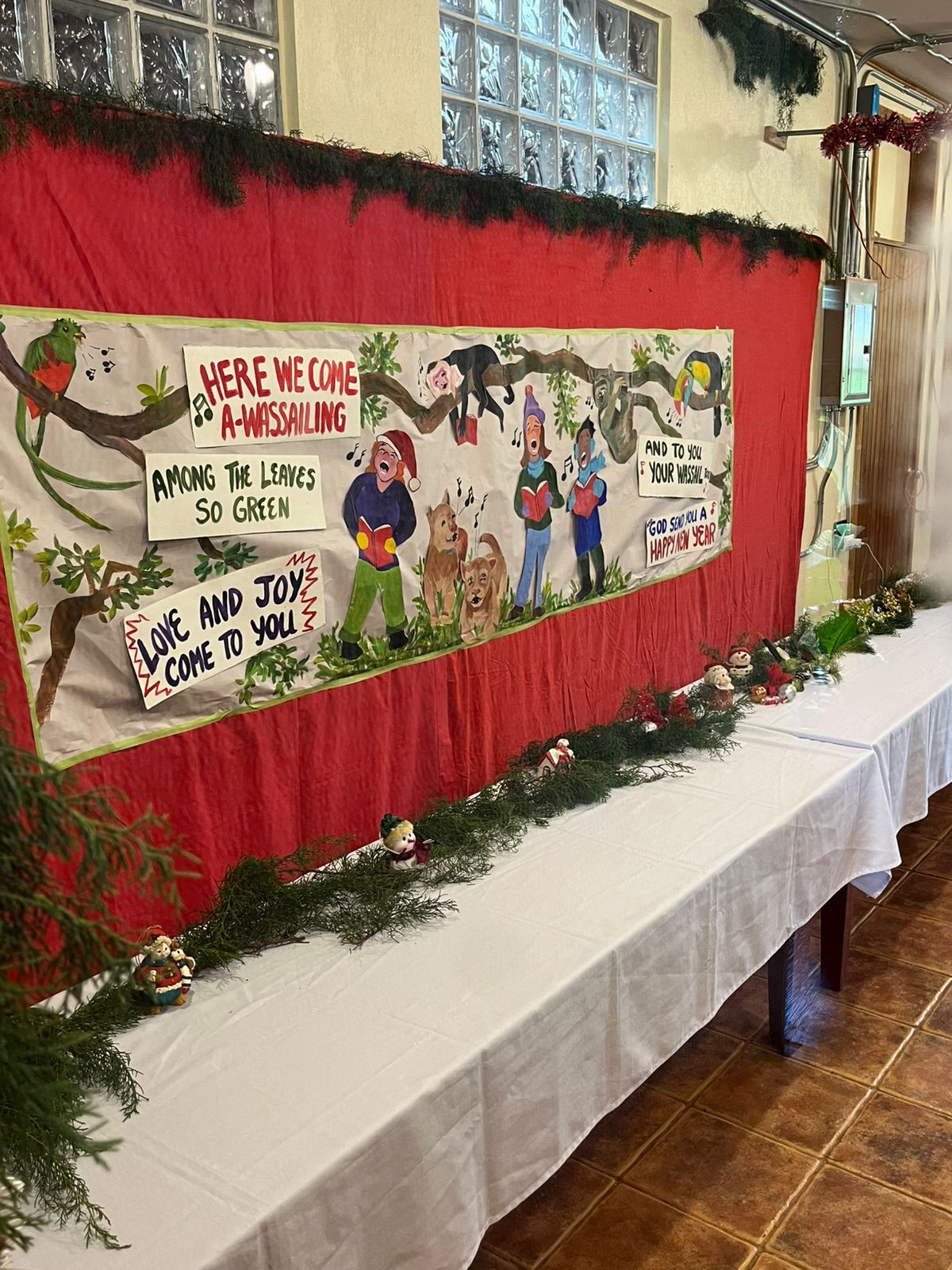
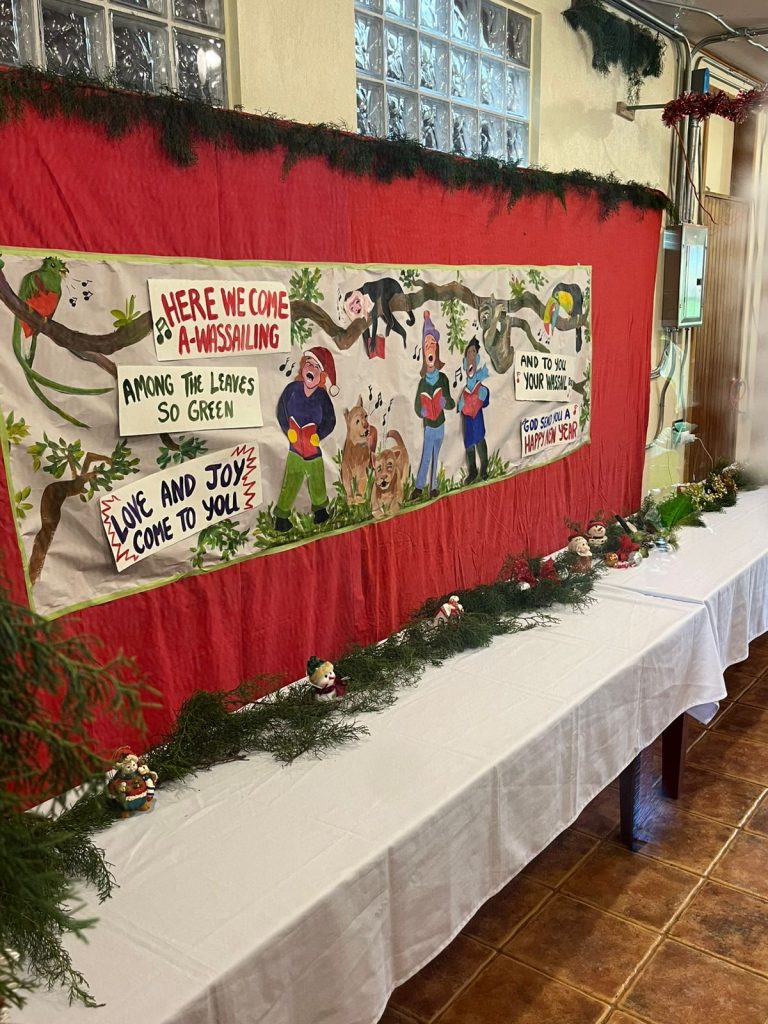
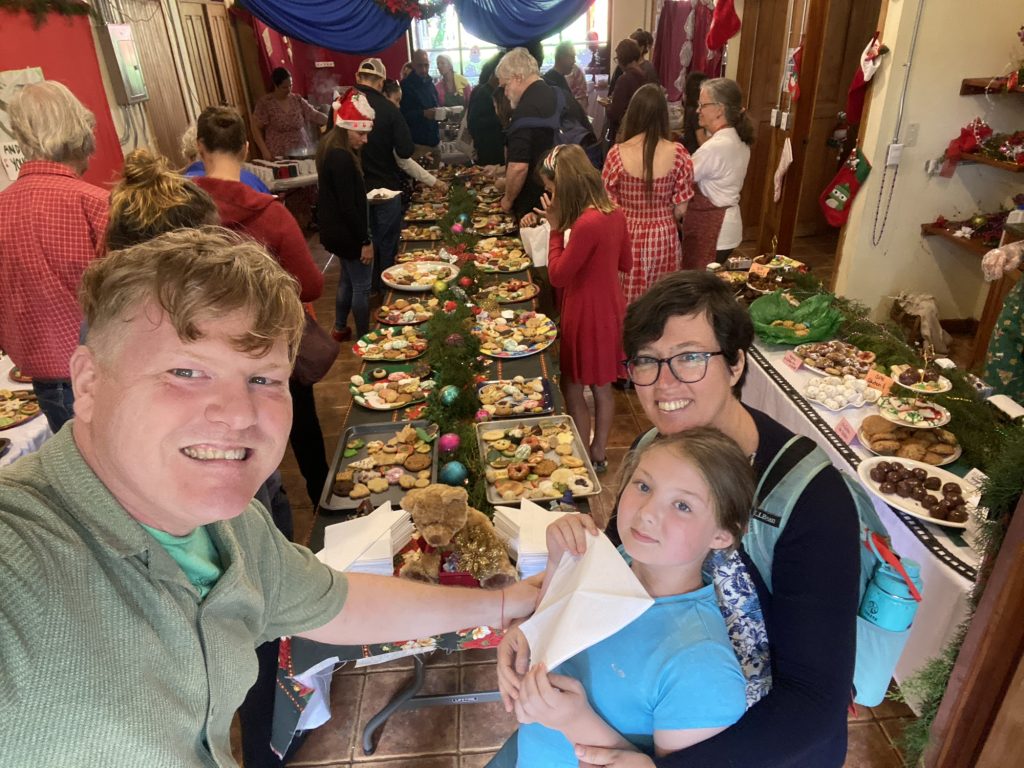
On Sunday, I went to a Christmas party called “Wassail” (rhymes with fossil, or if you’re in my choir, you call it “waffle”. Local community members call it “cookie day” – you will see why). It was run by the Monteverde Friends Meeting.
But before the wassail, there was a Christmas Program, which the Quakers have been holding for 71 years! During the program, community members performed different acts about Christmas. There were some songs like Silent Night, Angels We have Heard on High and readings and a little play.
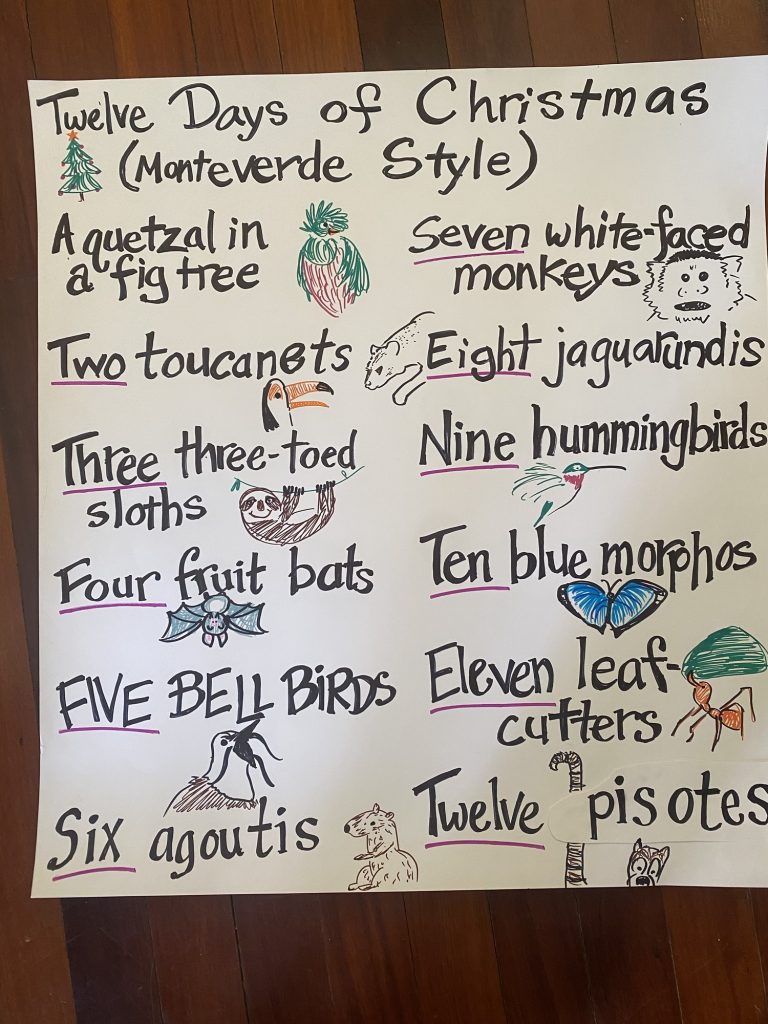
Our family was the first act and we led a song: the 12 days of Christmas, Monteverde edition.
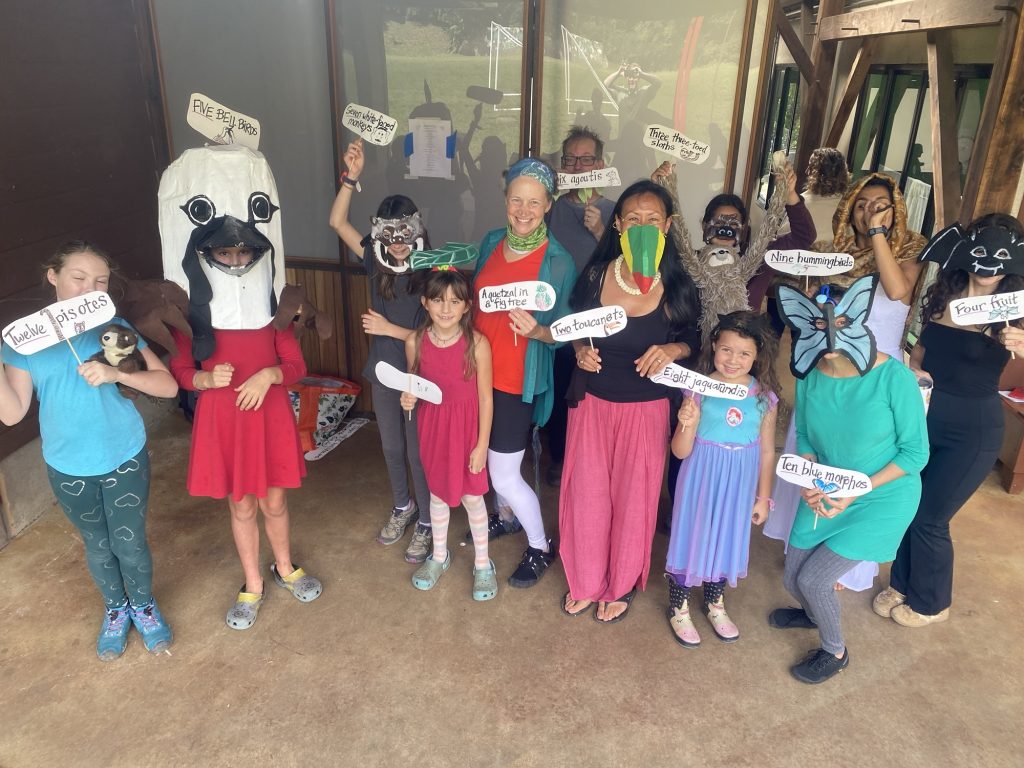
We got many friends young and old to participate. Each person was assigned an animal, each representing one of the 12 days. Some of them had masks that my dad made, some had stuffy animals, and some had other types of costumes.
When we got to their day, they came out onto the stage and performed an action like their animal. The sloth was very slow, the quetzal flapped her wings, and the hummingbird used a stick as their beak and fluttered around in a zig-zag way like hummingbirds fly.
Right after that, my choir was the next up. We sang a song called “Prince of Peace”. My solo was up first, even before the first chorus. I was shaking internally but everyone said afterword that I did great. I took a couple of deep breaths and I think that helped make it so my voice didn’t tremble.
The last act of the program was the kitchen sink orchestra. It had some string instruments, a keyboard, some woodwinds and a trumpet and a saxophone. There were also some unusual instruments like slid whistles, kazoos, maracas, a washboard, a triangle played with a metal spoon. The cymbals at the end were two pot lids! Everyone was wearing kitchen aprons too! They played Rudolph the Red-Nosed Reindeer and the Wassail song.
Then, row-by-row, led by our friend Richard playing the saxophone, we all paraded to the kitchen where there were a ton of cookies waiting. Everyone who came to the wassail made 12 cookies to contribute and it was quite a spread! At the beginning, everyone took 5 cookies and a mug of wassail – a warm fruit juice punch. The cookies were yummy and the wassail was tasty.
Some of us went back for seconds: we brought ours home with us to eat on the airplane on our way to Chicago for Christmas.
Overall, wassail was fun. There were yummy treats and I got over singing my first solo ever!
Costa Rican Spanish has some unique characteristics. You’ll hear about the phrase pura vida as soon as you walk off the plane, for instance. It means something like “pure life”, literally, but it really means something akin to “aloha” in Hawaii: hello, goodbye, thank you, etc., etc. People say it all the time.
Lynnette’s favorite is ¡que dicha! which translates as something like “what luck” or “luckily”. When something nice happens you often hear people say que dicha.
And then, of course, there are local vocabulary words that are just different here. In some parts of Costa Rica, an agouti is called a cherenga, but it’s also known as a guatusa.
You can call me an agouti or a cherenga or a guatusa… just call me.
But every country has its special vocabulary. What I find more interesting is the fact that Costa Rica has some distinct grammar, and what’s more, that grammar is in a state of flux.
When one is taught Spanish in the United States, you usually learn a variant which is close to (for example) the Spanish of Mexico or Puerto Rica. In such variants, there are two ways to say‘you’, tú and usted (which is usually abbreviated Ud.).
When you use usted, you may mean ‘you’, but grammatically speaking you’re saying “he” or “she”—in grammatical terms, it’s the third person. It’s a bit like how one might address a king or a queen with “your highness” or a judge as “your honor” in English.
Nowadays, in Mexican Spanish, usted is not as fancypants as “your highness”, but it the more respectful choice—you use it when you’re talking to an older person, or a teacher, or to someone in a business situation. Tú is less formal—you use it when you’re talking to children or friends. So to summarize:
There are two ways to say “you” in Mexico or Puerto Rico
Person
Formality
tú
Second
Informal
Ud. (usted)
Third (Second meaning)
Formal
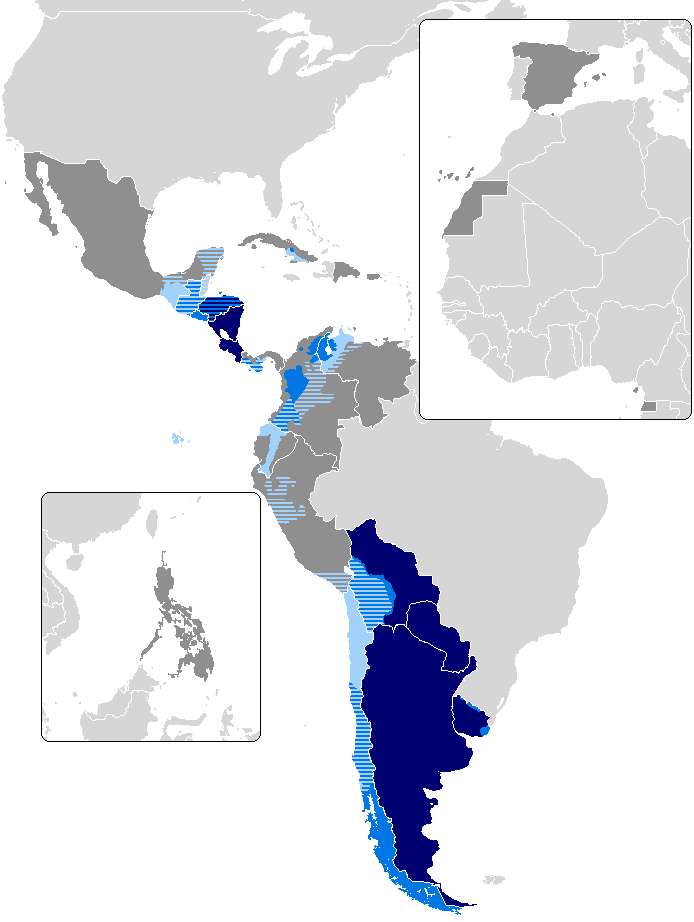
This pattern is called tuteo in Spanish linguistics, and is the standard in lots of countries. In the map below, the dark gray countries all use tú for informal contexts and Ud. in formal contexts.
Three ways to say ‘you’
So what about the blue bits? Well, that’s where things get more complicated. In Argentina, Paraguay, Uruguay, Guatemala, Honduras, Nicaragua, Costa Rica, El Salvador, and to some extent in Bolivia and Chile (and some parts of several other countries) there’s a third way to say “you”: the pronoun vos. The details of how second person pronouns work in a given country can be quite complex, but it’s worth noting that vos is by no means marginal. It exists in some form in a majority of Spanish-speaking countries. Some countries only use vos, some use vos as well as tú, some only use tú in writing, and so forth.
Vos in Costa Rica
So what about the Ticos? Guess what? As far as Lynnette and I have been able to decipher, it’s complicated here too!
In Costa Rica as whole, all three ways to say “you” exist
Person
Formality
tú
Second
?
vos
Second
?
Ud. (usted)
Third (Second meaning)
?
Even thought Costa Rica is a small country, there is plenty of variation in the use of second-person (you) pronouns here.
Among language nerds, the fact that vos is used in Costa Rica is kind of a meme. So we were surprised to discover that in Monteverde the use of vos seems quite limited. Here — and this seems to be a distinct pattern from the one in the capital, San José — usted has taken over almost all second person pronoun responsibilities, with nary a tu or a vos in earshot. Lynnette, who learned Salvadoran Spanish, was quite surprised to hear Costa Rican parents addressing their children with usted which would be unheard of in El Salvador. So at least for some speakers here in Monteverde, there is only one second person pronoun, usted. This pattern is sometimes called ustedeo:
“You”, Monteverde style. Just one way!
Person
Formality
Ud. (usted)
Third (Second meaning)
All formalities
We have talked to some long-time residents of Monteverde who deny that vos plays any role in the zone. That’s clearly not the case, because, at the very least, lots of people here grew up in different areas of the country.
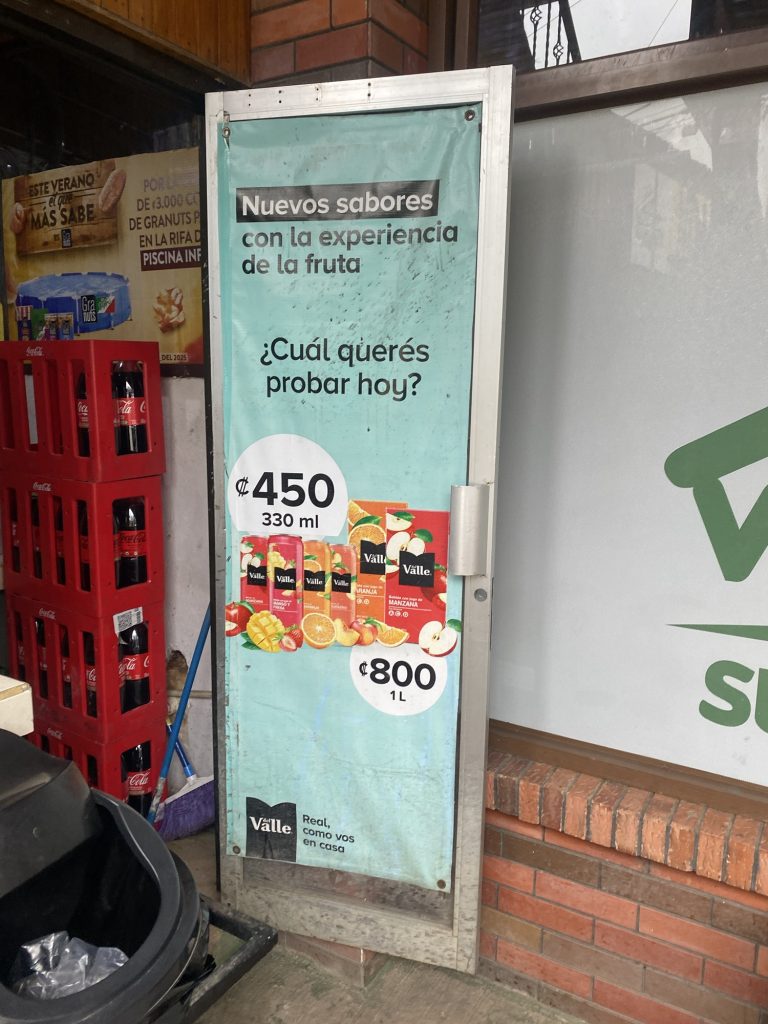
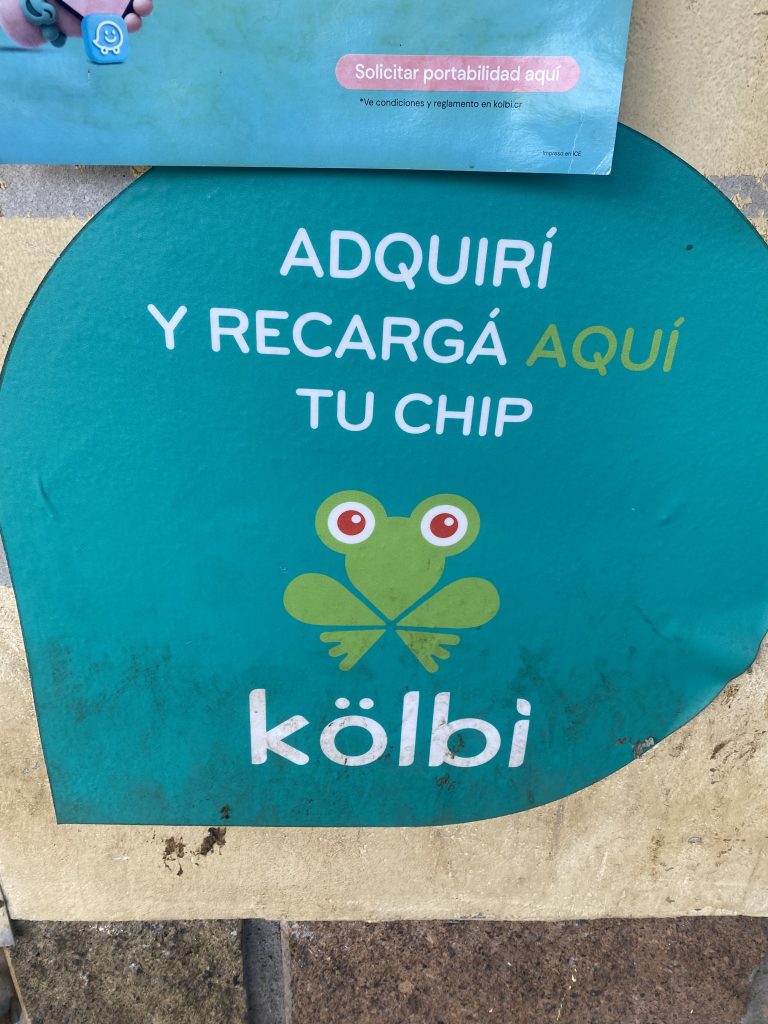
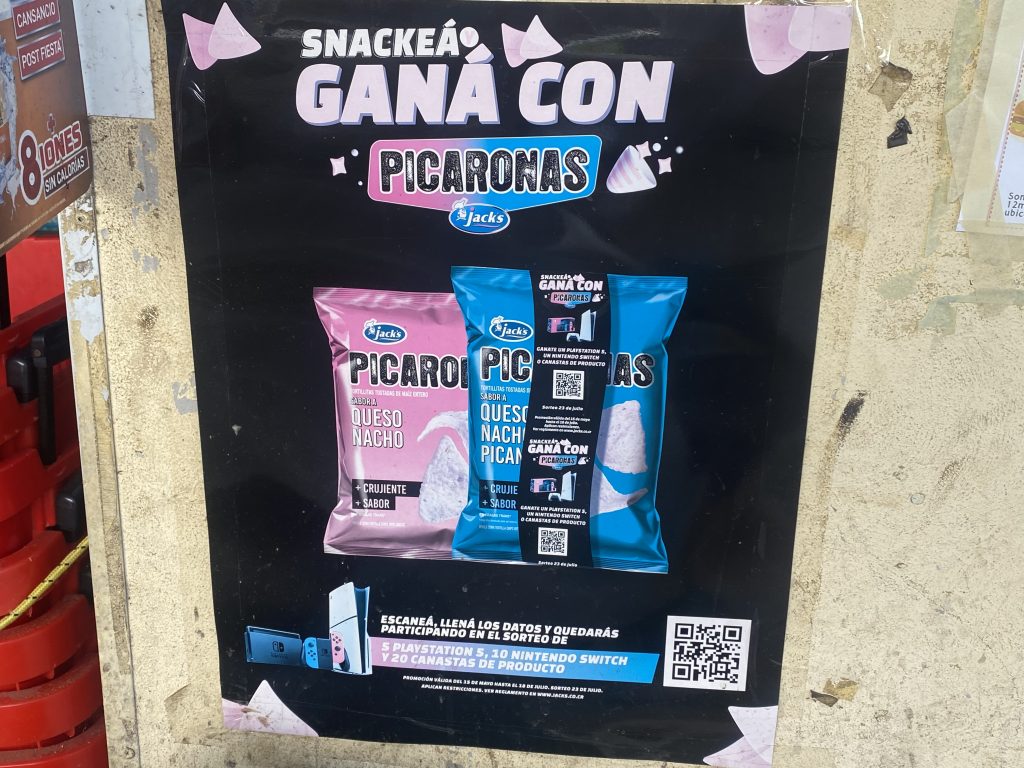
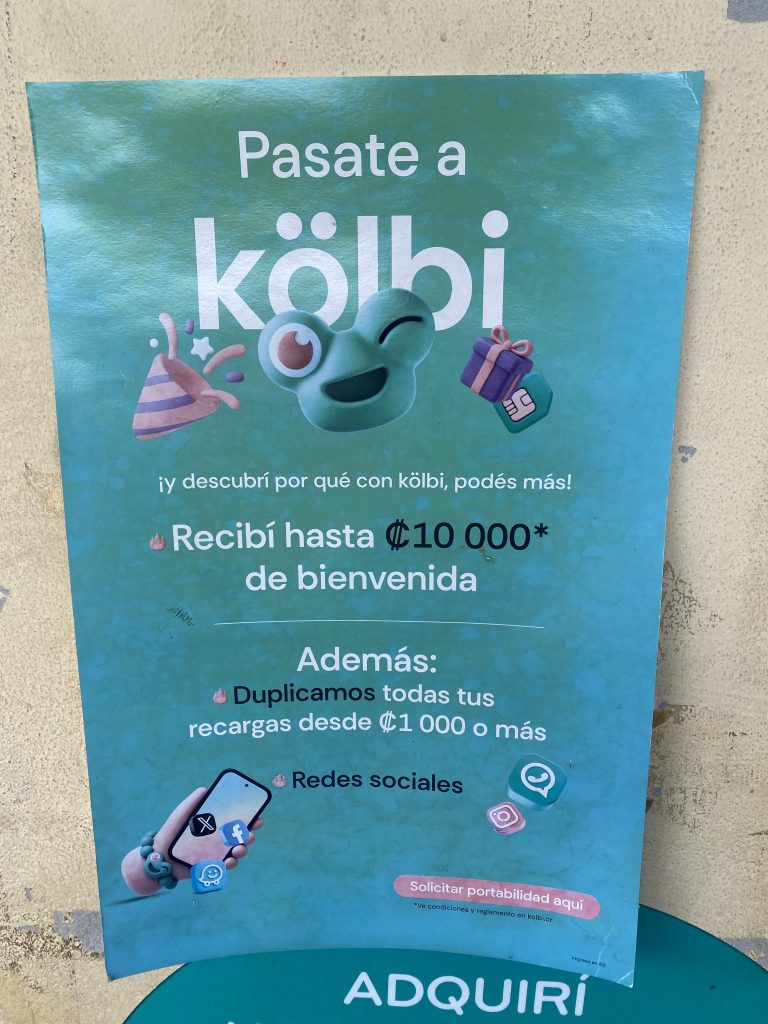
But there is one place where the evidence is plentiful: advertising.
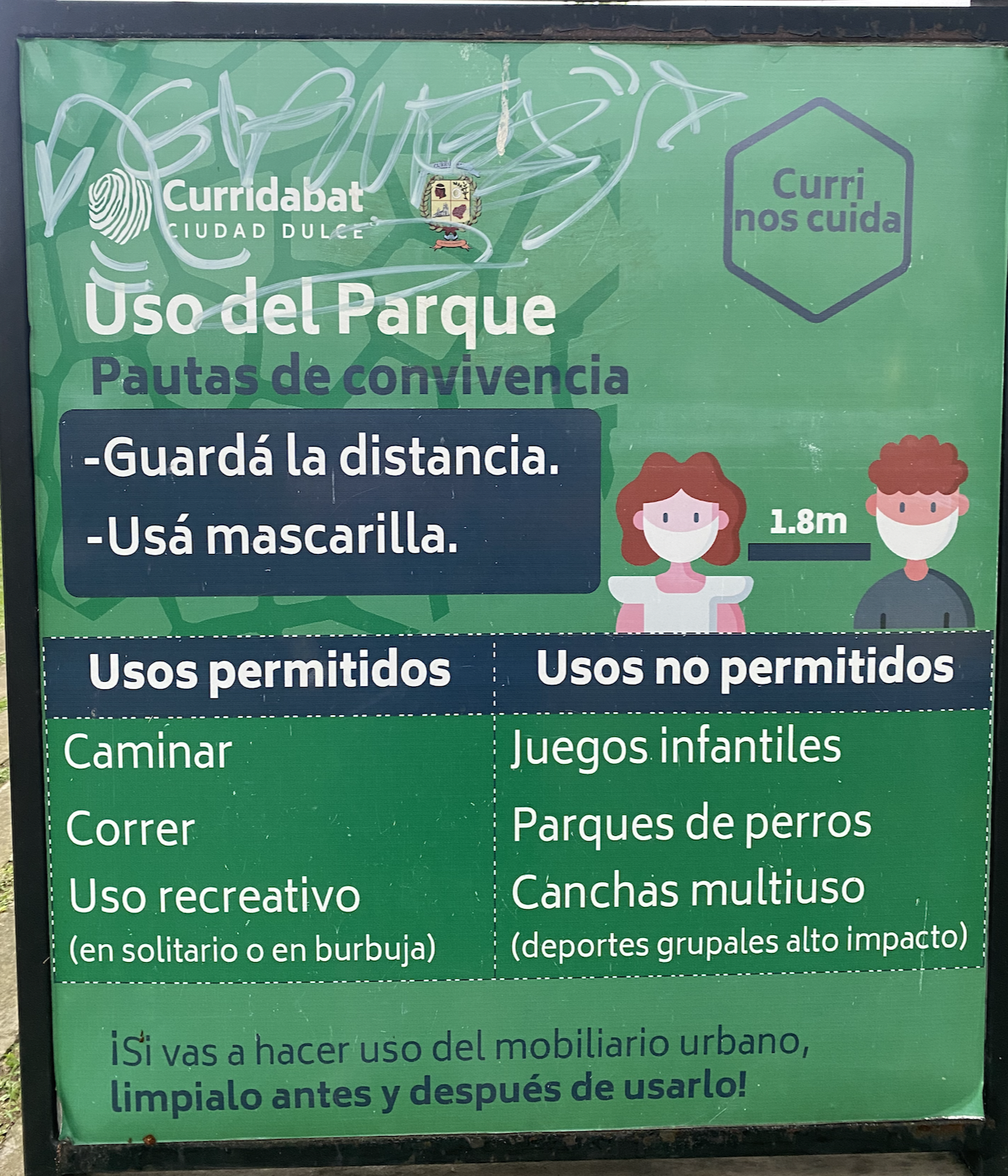
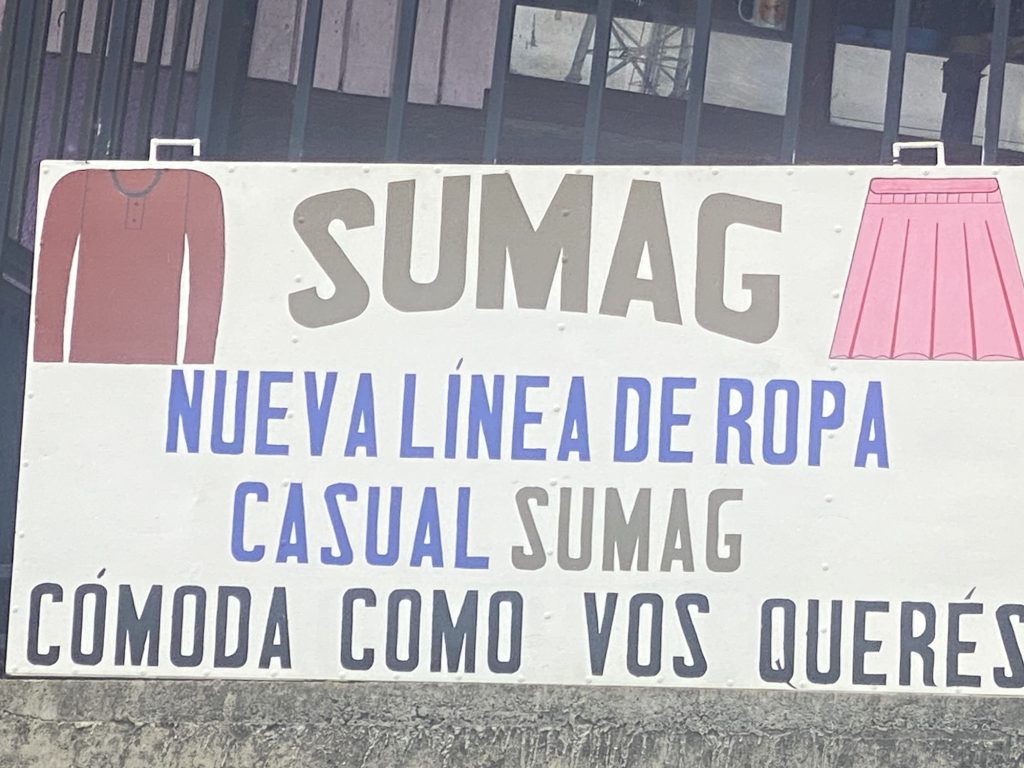
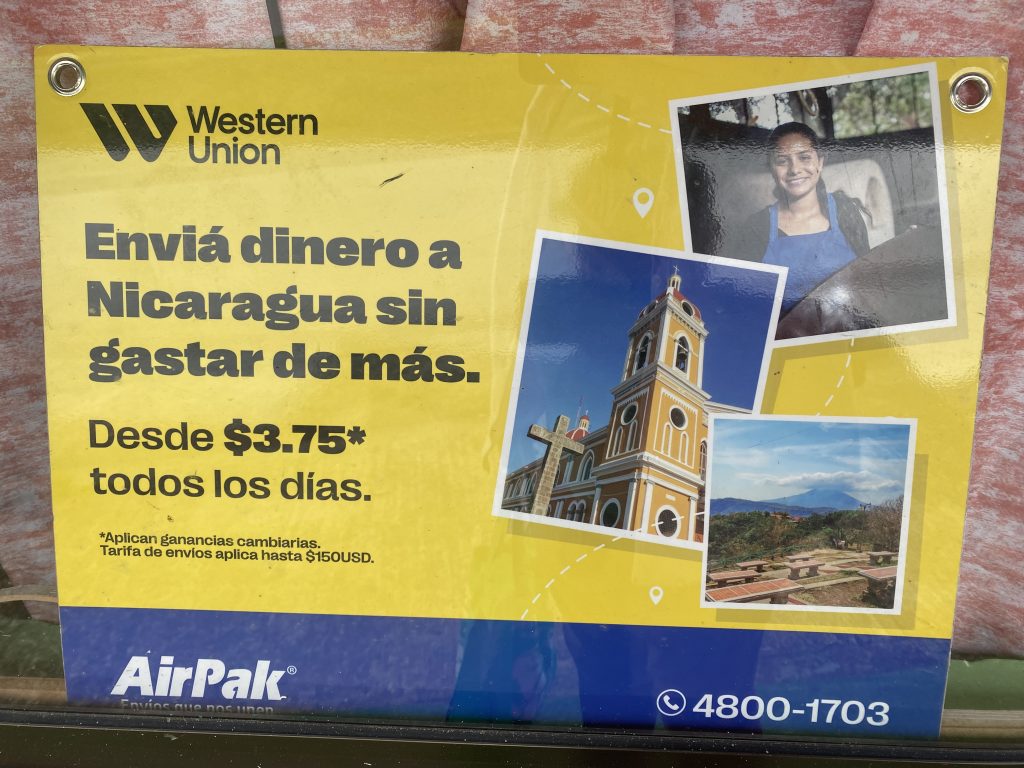
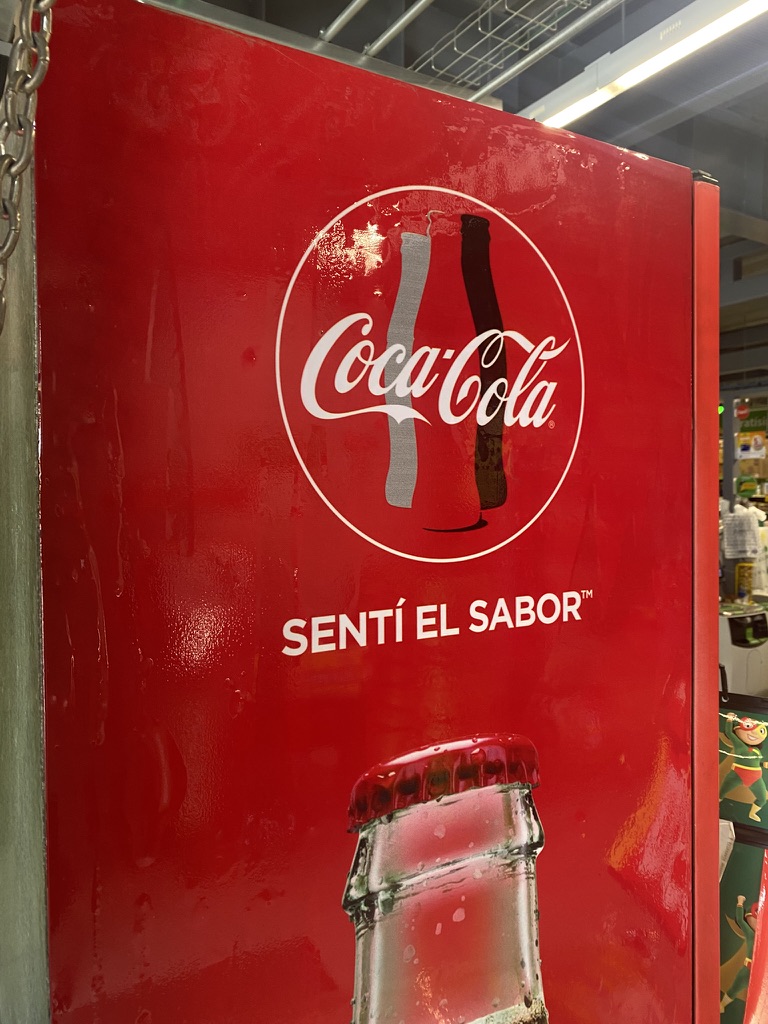
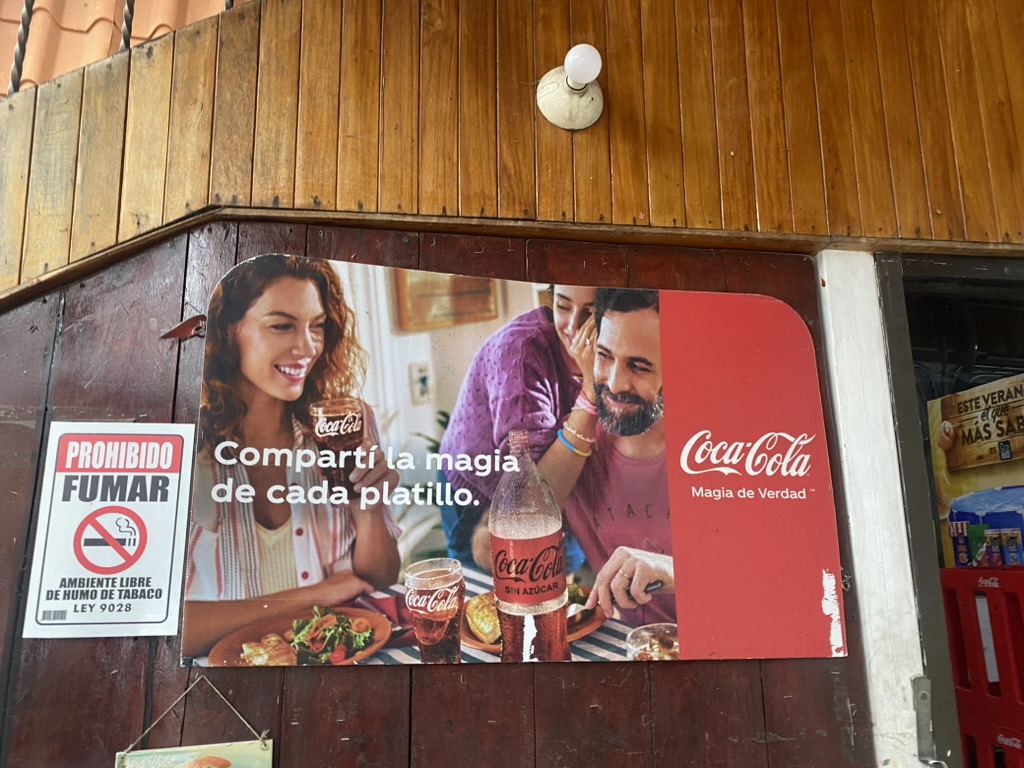
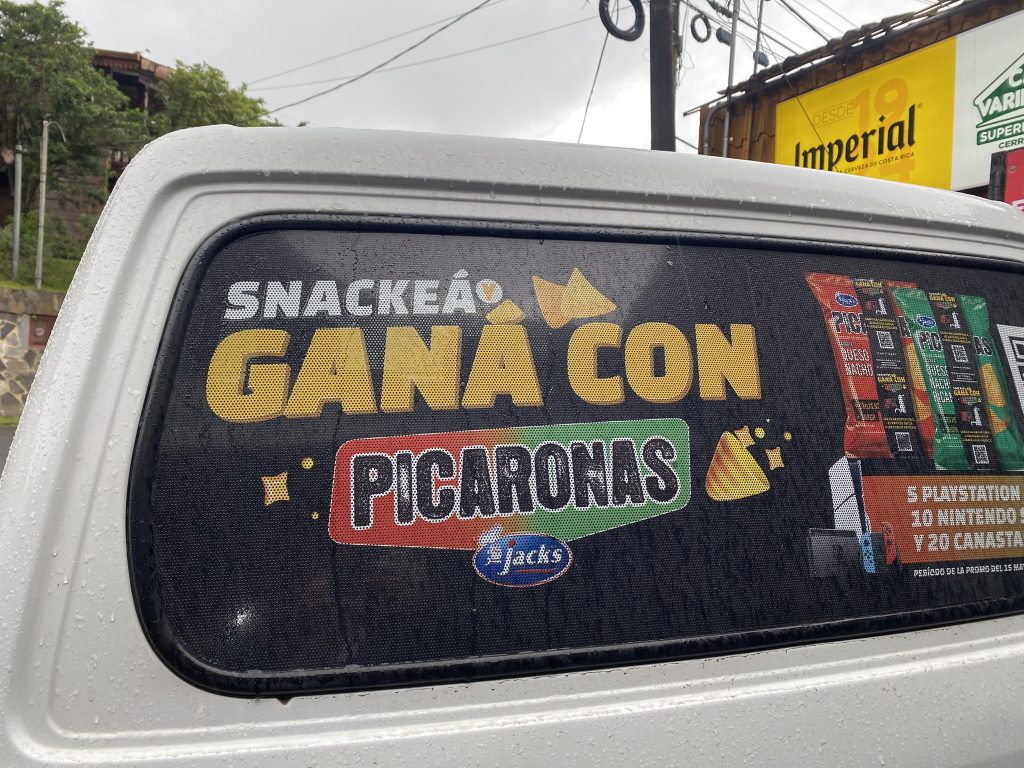
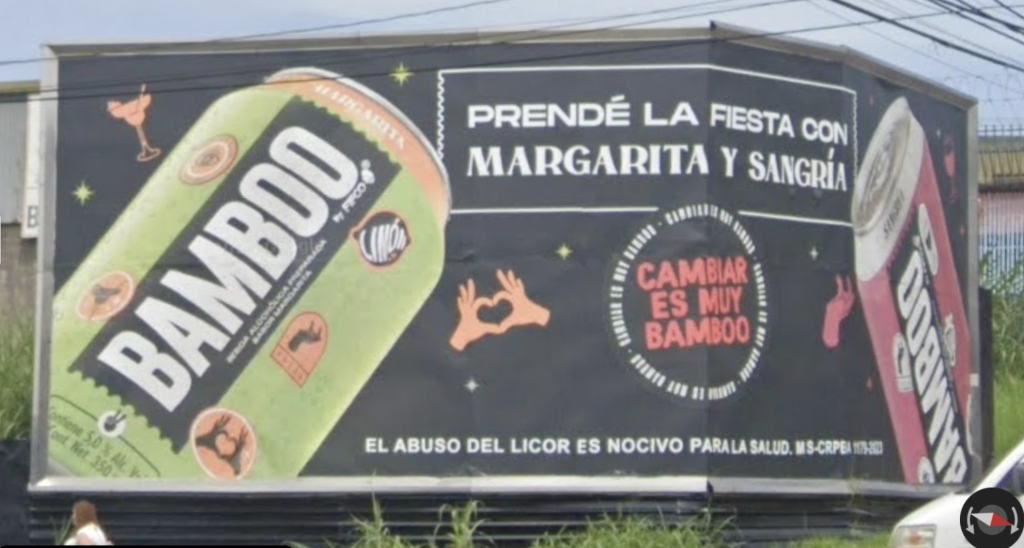
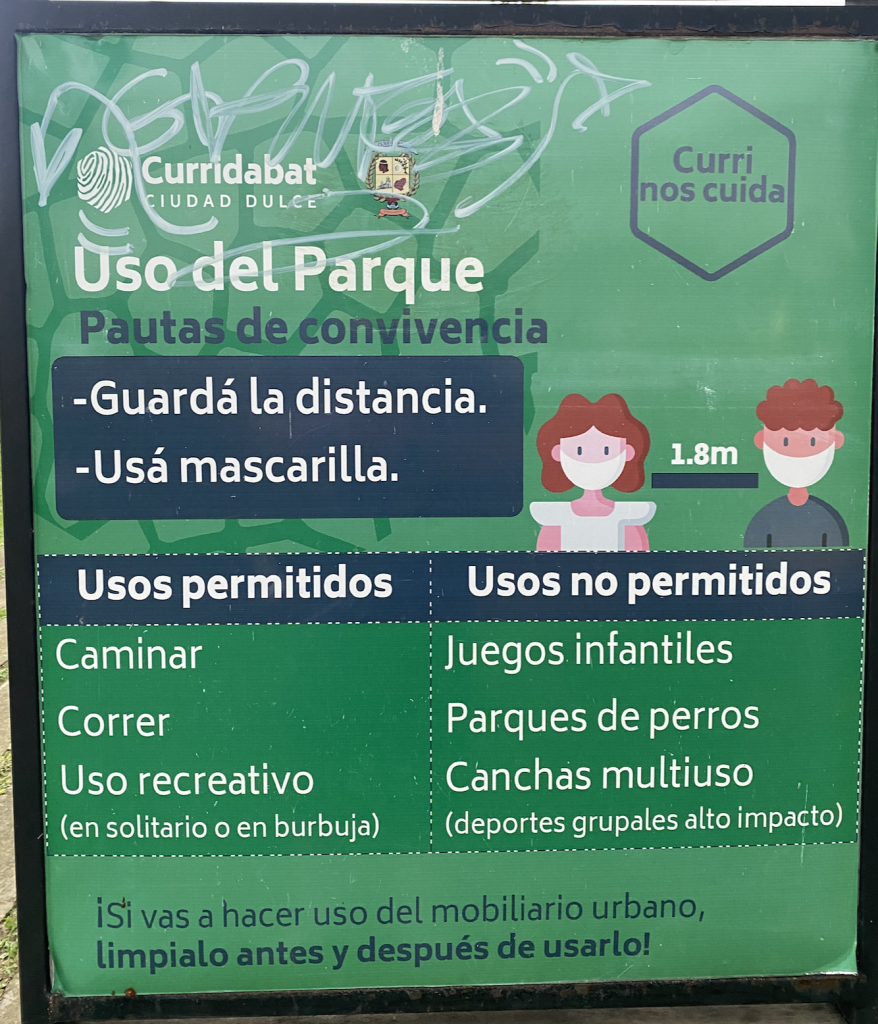
Nueva línea de ropa casual Sumag, Cómoda como vosquerés. ¿Cuál querés probar hoy?¿Tu dinero está trabajando menos que vos? Dejá que tus inversiones crezcan?Adquirí y recargá aquí tu chipSnackeá y ganá con PicaronasPasate a kölbi ¡y descubrí por qué con kölbi, podés más! Recibí hasta ₡10 000 de bienvenidaEnviá dinero a Nicaragua sin gastar de más.Sentí el saborMultiplicá tu ahorro y ganá hasta Compartí la magia de cada platillo.GastroAlivio ¡Comprás 1 te llevás 2! Snackeá y ganá con Picaronas “Snack and win with whatever Picaronas are!”Compré por internet lo que querásVendé por internet lo que querásEncendé su magia “Light your magic” by you know, drinking a beverage.Prendé la margaritaDistrutá tu recarga al máximoAdquirí tu SIM aquí y duplicá tu saldoaComete un SnickersPausá, hidratate, y regresá con más powerTramitá tu pasaporte o cédula de residenciaSeguí todo para tu PCEstudiá criminologíaSonreí Todo irá sobre ruedasGuardá la distancia. Usá mascarilla.
Every one of these examples has verb forms that agree with vos on it, both in command (imperative) and present tense (indicative).
Transcription and translation of all the forms above
Nueva línea de ropa casual Sumag, Cómoda como vos querés.
¿Cuál querés probar hoy?
¿Tu dinero está trabajando menos que vos? Dejá que tus inversiones crezcan.
Adquirí y recargá aquí tu chip
Snackeá y ganá con Picaronas
Pasate a kölbi y descubrí por qué con kölbi, podés más! Recibí hasta ₡10 000 de bienvenida
Enviá dinero a Nicaragua sin gastar de más.
Sentí el sabor
Multiplicá tu ahorro y ganá hasta
Compartí la magia de cada platillo.
GastroAlivio ¡Comprás 1 te llevás 2!
Snackeá y ganá con Picaronas “Snack and win with Picaronas!”
Compré por internet lo que querás
Vendé por internet lo que querás
Encendé su magia “Light your magic” by you know, drinking a beverage.
Prendé la margarita
Distrutá tu recarga al máximo
Adquirí tu SIM aquí y duplicá tu saldo
Comete un Snickers
Pausá, hidratate, y regresá con más power
Tramitá tu pasaporte o cédula de residencia
Seguí todo para tu PC
Estudiá criminología
Sonreí Todo irá sobre ruedas
Guardá la distancia. Usá mascarilla.
What a vos form looks like
Okay, I can’t resist explaining how verbs are formed to agree withvos, mainly because it’s super simple! If you had some high school Spanish, you know the infinitive. To form the present vos form, replace the -r of the infinitive with -s, keeping the stress on the last syllable. To create the imperative, you just remove the -r, donesies.
to speak
to light
to snack
Infinitive
hablar
encender
snackear
Present
hablás
encendés
snackeás
Imperative
hablá
encendé
snackeá
Hablar is the simplest example, the rules are plain as day. It works the same way with encender, but it’s notable that in many other conjugations that verb is “stem-changing” — for instance, the tú form is enciendes: the e becomes ie.But stem changes coincide with stress, and since stress is final in vos forms, there’s no e to ie. Neat.
The last one just made me laugh, since it’s a borrowing from English.
Permit me, one more nerd moment: it suprised the heck out of me in my little collection above to notice a vos form in the subjunctive!
to want
Infinitive
querer
Present
querés
Imperative
queré
Subjunctive
querás
Presumably hablés and encendás and even snackeés would be possible too.
One more example…
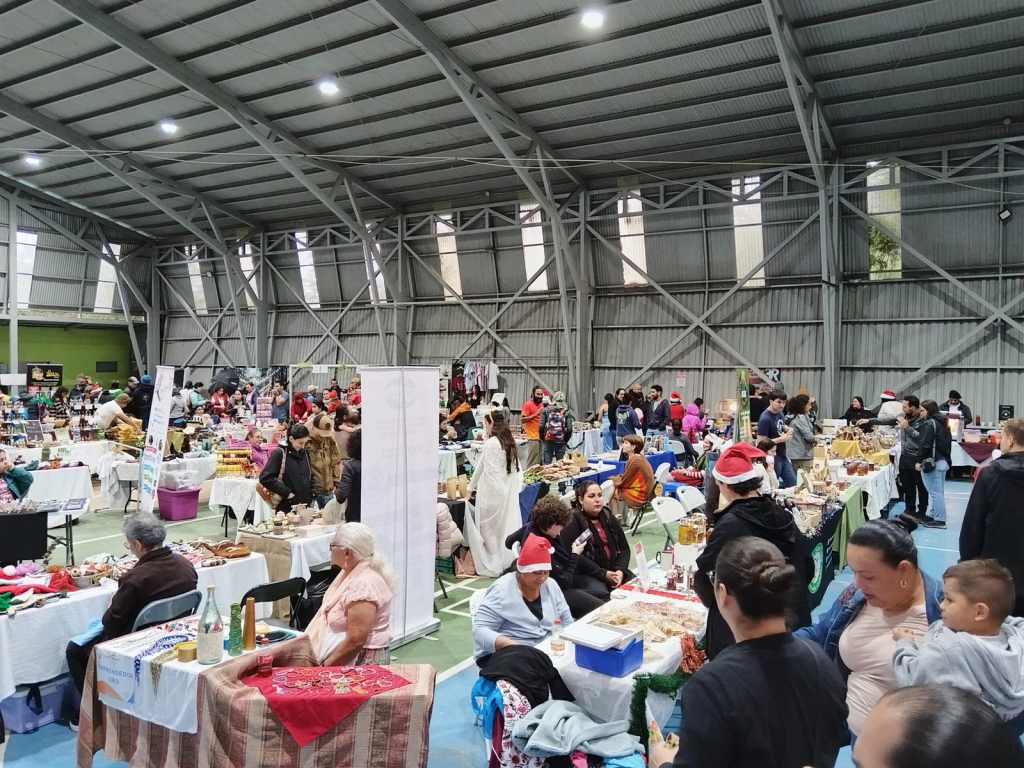
Okay, I’ll wrap this up already, but I have to share one more example. I have made many friends as a volunteer English teacher here in Monteverde. We met once a week for the last couple months, and it was really fun. They all work at the Mercado de Monteverde, a popular market held at the local high school. They all sell different kinds of products there. In class, we speak a fair amount of Spanish too, and I have noticed that they mostly use usted, as expected in Monteverde.
However, in a nifty video that they made to promote their Christmas event, at the very end of they video they use vos forms. I thought it was so interesting, because lo and behold, at the end of the video, there are three uses of the vos form of the verb venir, ‘to come’:
Vení a vivirlo. Come to live it! Vení a sentirlo. Come to feel it! Vení a ser parte. Come to be a part of it!
I asked the class about it specifically, and they said that it was a conscious decision, that using the vos form sounded more “intimate”, and more convincing.
So after all this, I’m still not sure what the deal is with vos in Monteverde! But it is certainly interesting.
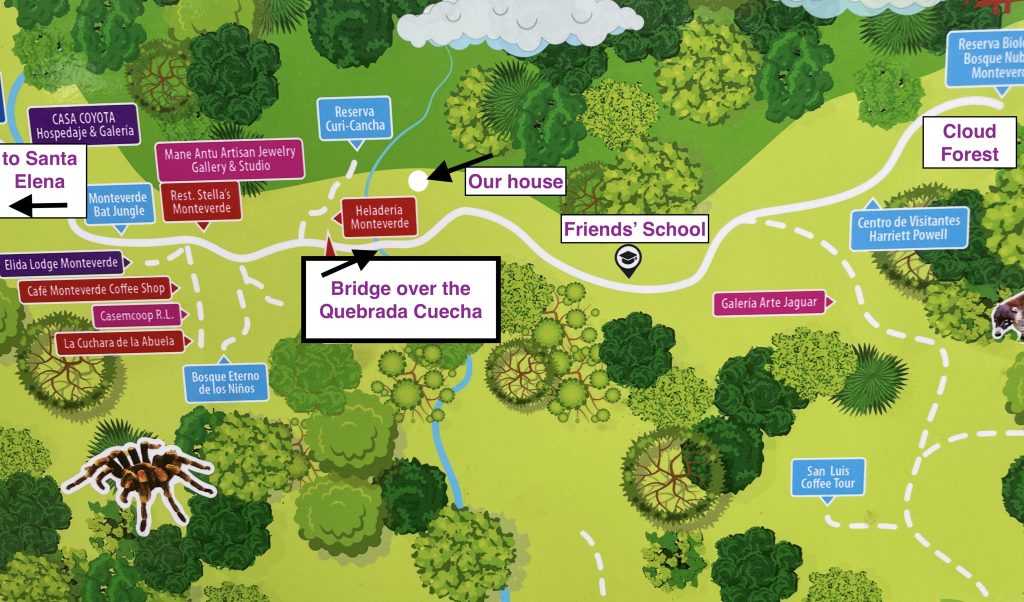
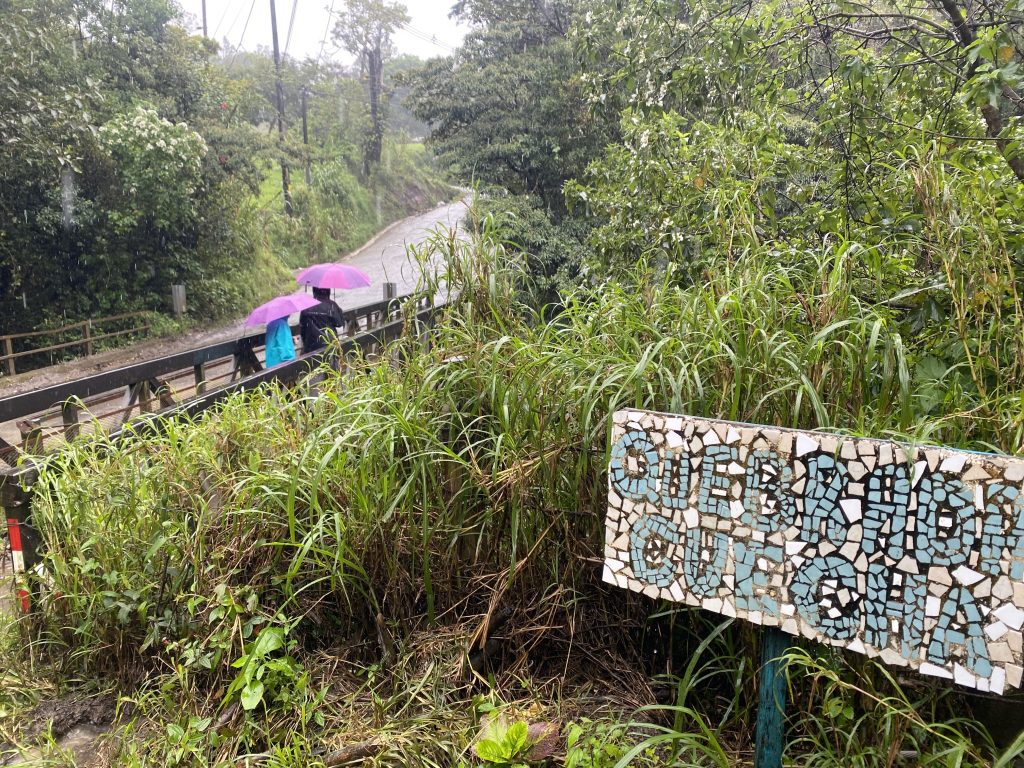
The major local story in Monteverde this month has been the replacement of the bridge over the Quebrada Cuecha. This bridge is the only way to get from Monteverde Center (and CASEM) up to the Friends School and the Cloud Forest Reserve.
The old bridge, built in 1983, was in danger of collapse after 42 years: check out this local news article about the history of the bridge, complete with historical photos!
Our house is just up the road from the bridge, so we got a close look at all the goings on! Check out these photos to see more about the construction process.
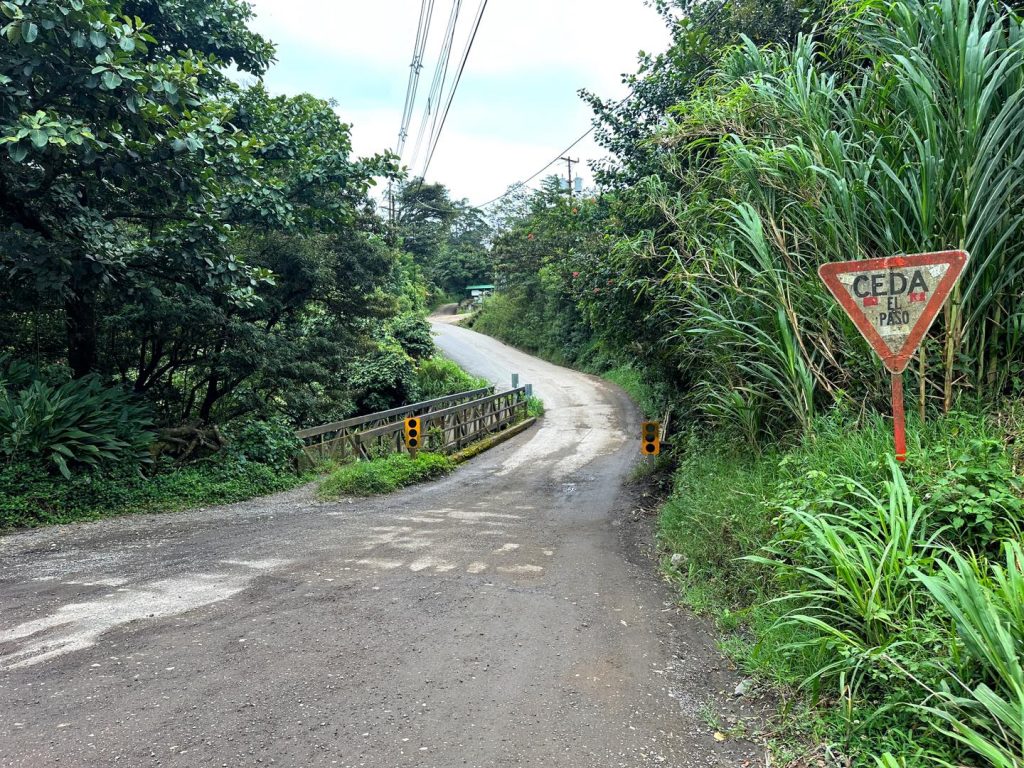
Here is what the bridge looked like before construction began.
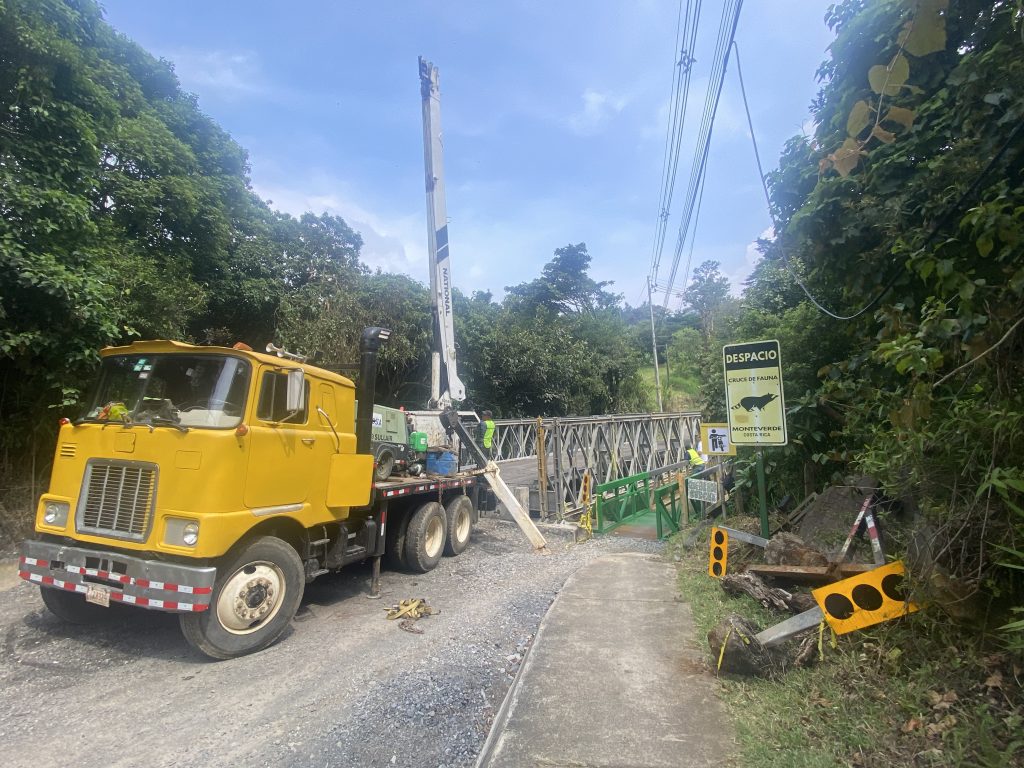
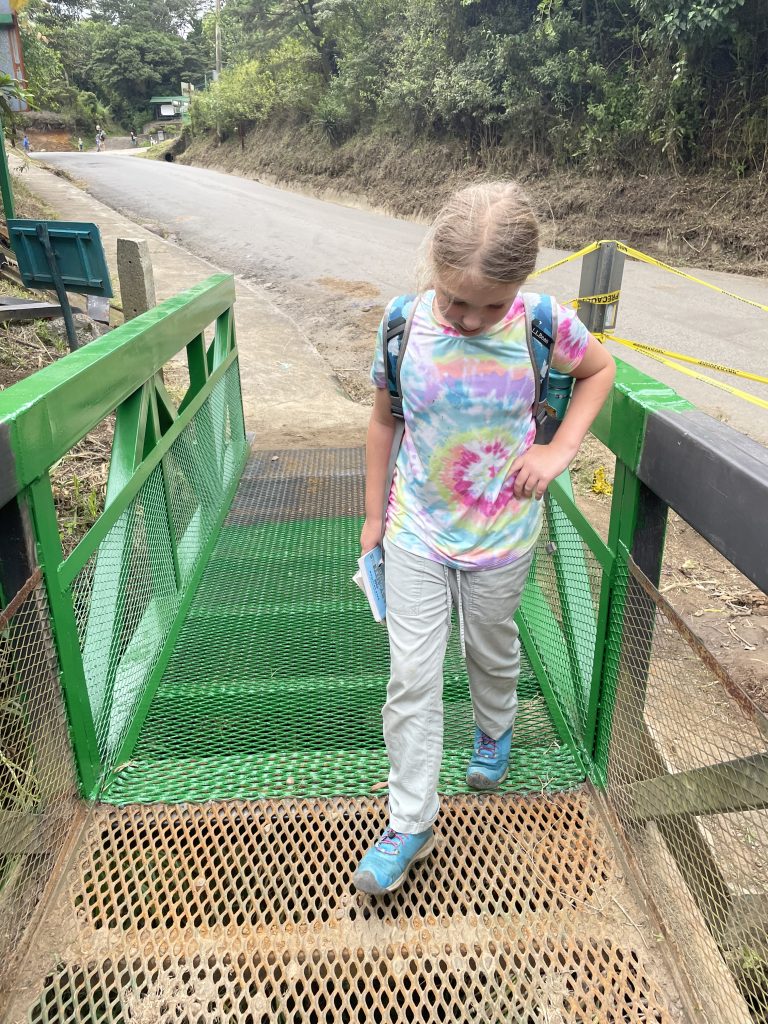
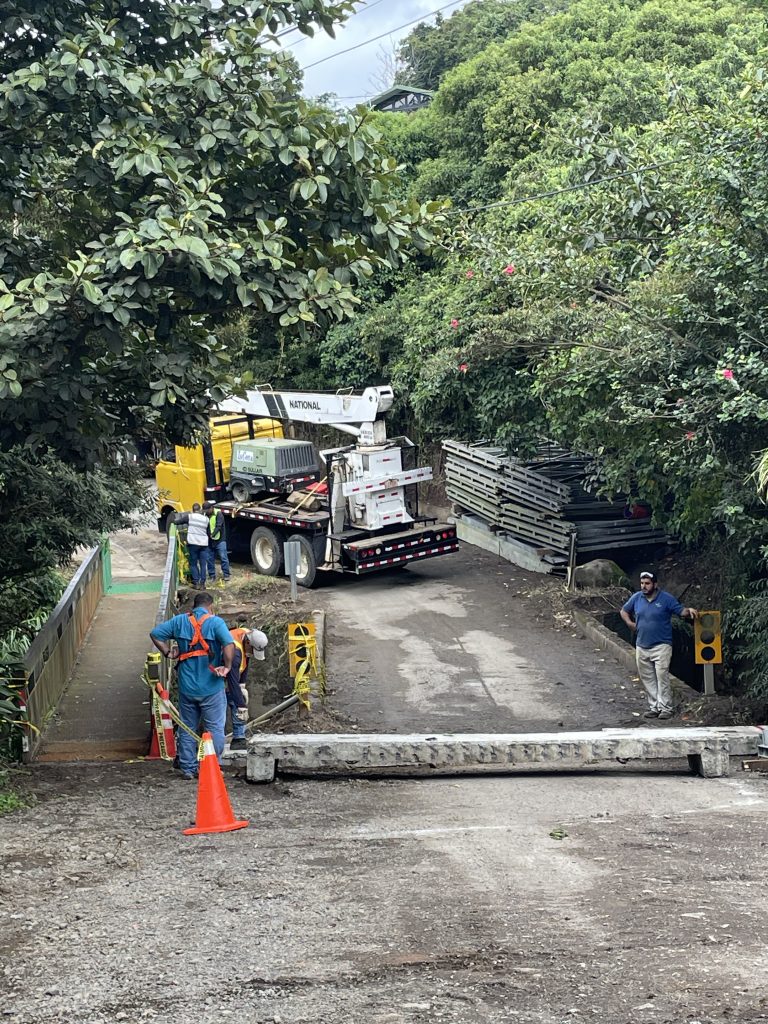
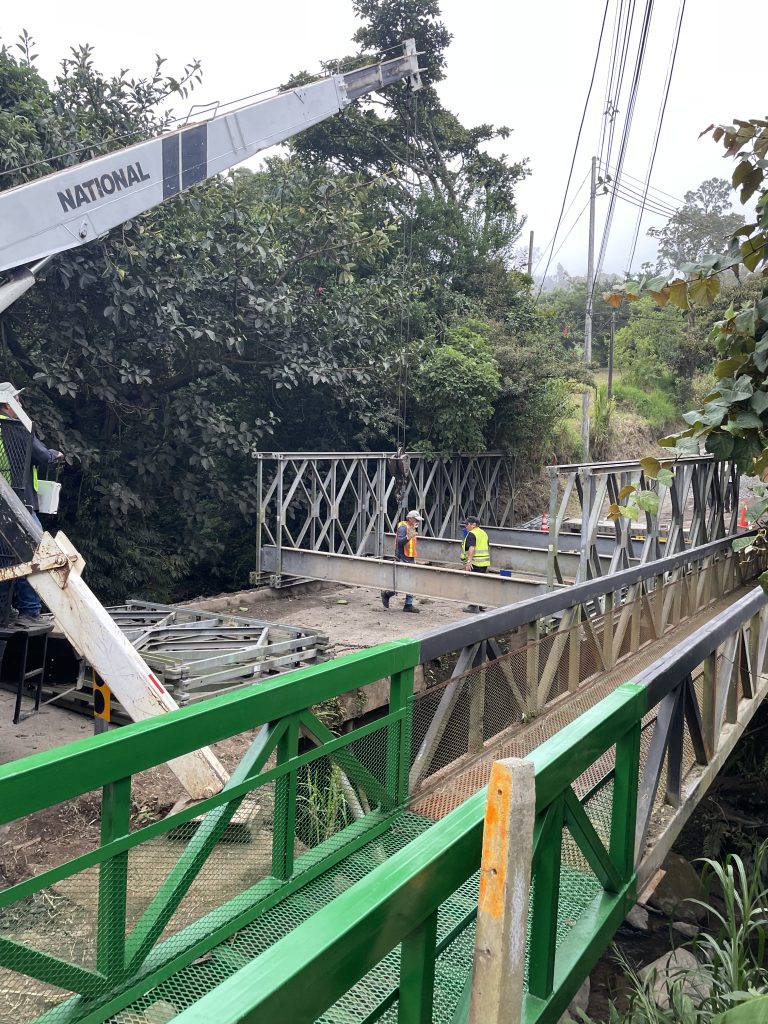
The first step was to relocate the pedestrian bridge. They used a crane to lift it up and move it over to make space for the new vehicular bridge.
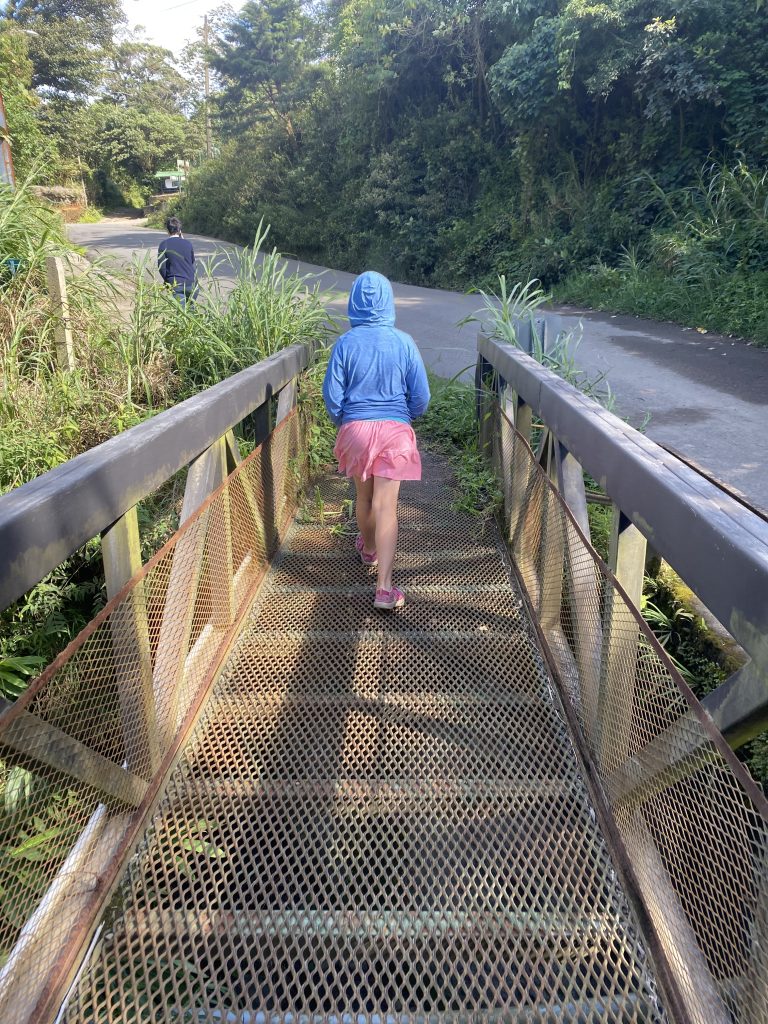
This new positioning required that they add an extension to the pedestrian bridge, which they just welded on! Here is Sophie with a before and after comparison.
Once the pedestrian bridge was installed, they closed the bridge to vehicle traffic. That caused a challenge for the Friends School, as most families live on the other side of the bridge. The staff worked hard to arrange a safe drop-off procedure, and the older students helped to walk the younger students up the hill. Sophie was excited because for the week that the bridge was closed, she was able to walk to school by herself, since there was no vehicle traffic!
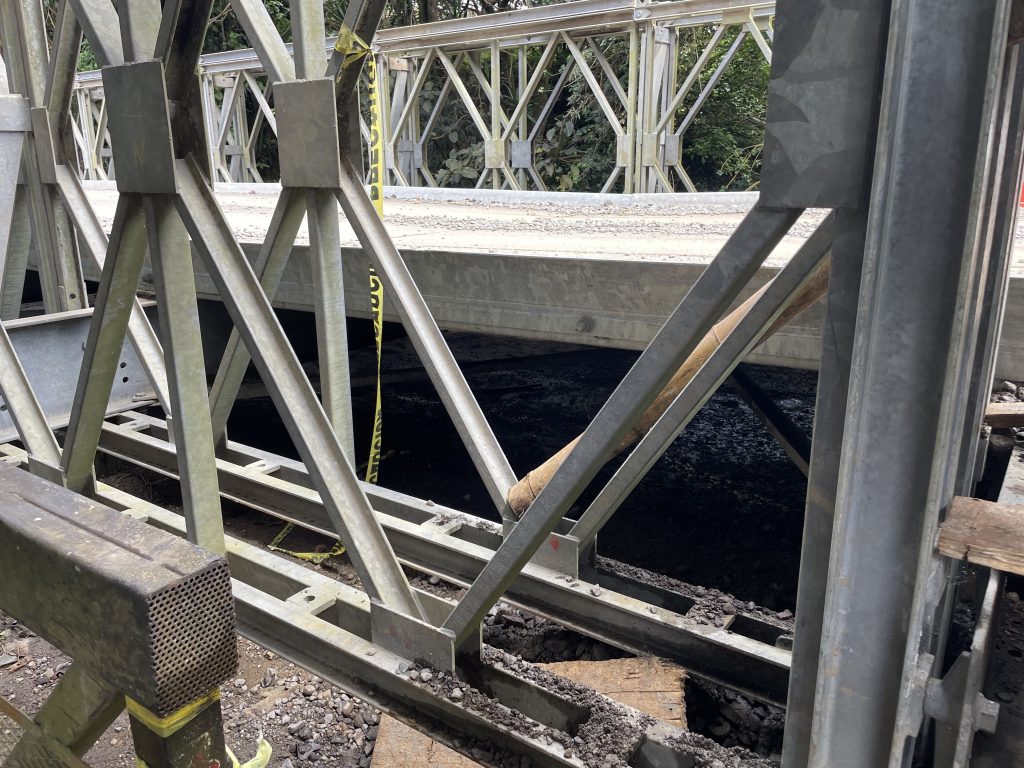
The first step was to install the new bailey bridge. This is a prefabricated bridge and they put it together almost like a lego set, right on top of the old bridge!
It didn’t take long and within a few days, the new bridge was assembled!
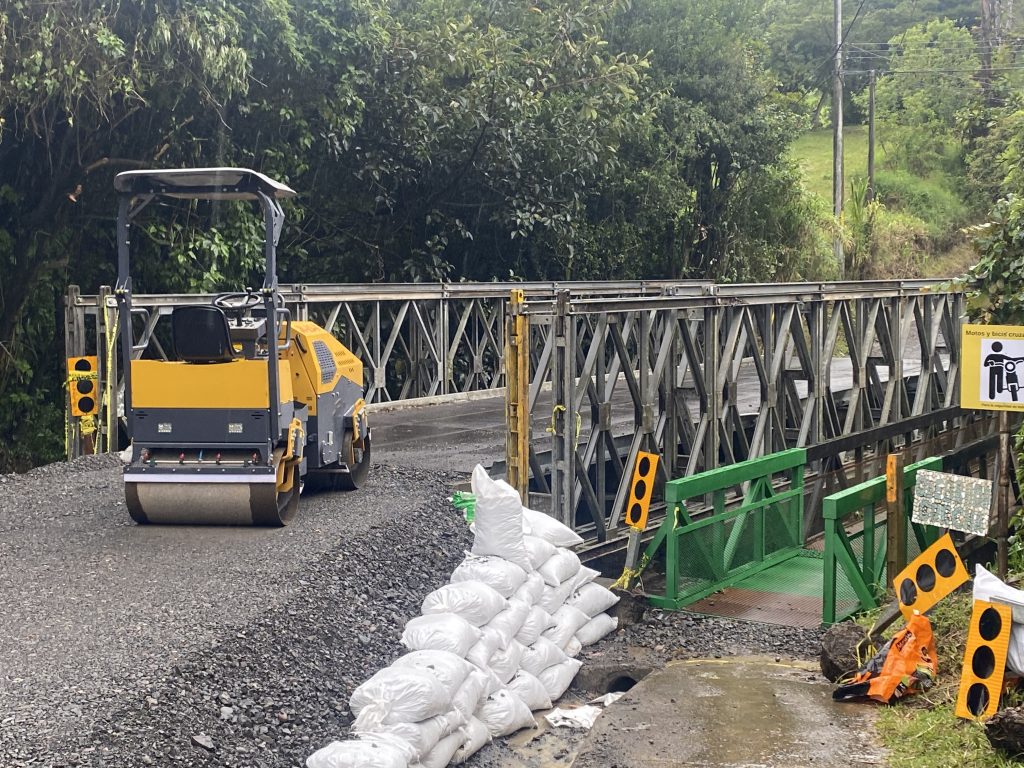
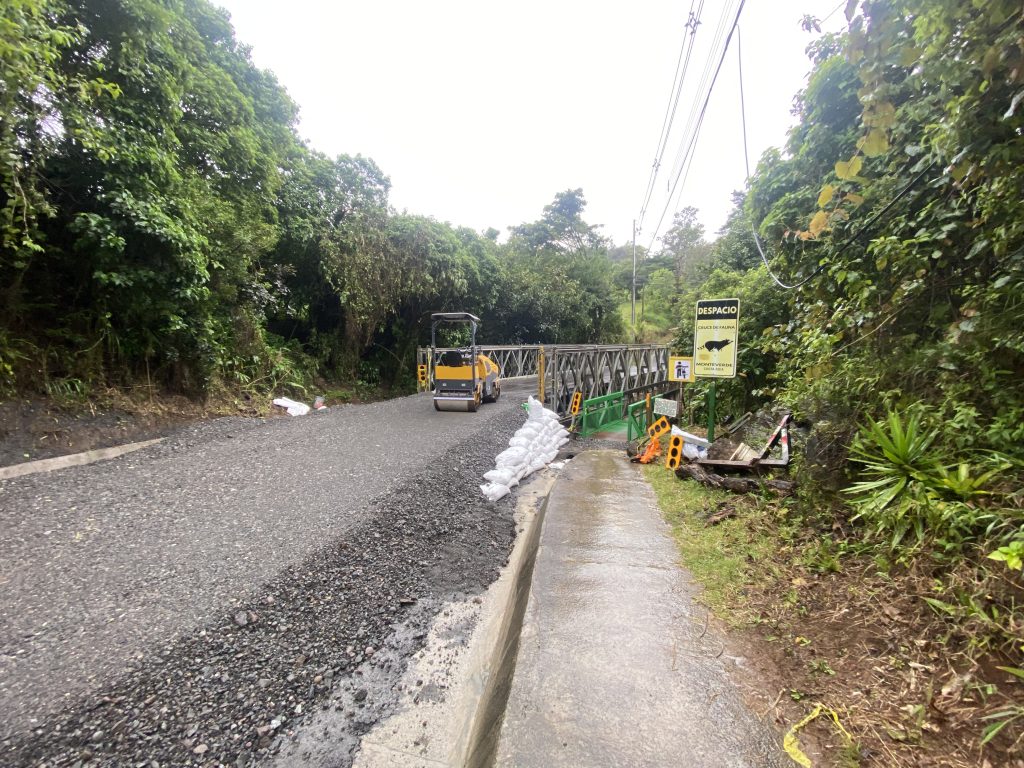
The new bridge was about a meter higher than the original bridge, so the next step was to build ramps out of gravel. They used a backhoe to put the gravel in place and then packed it all down with a roller.
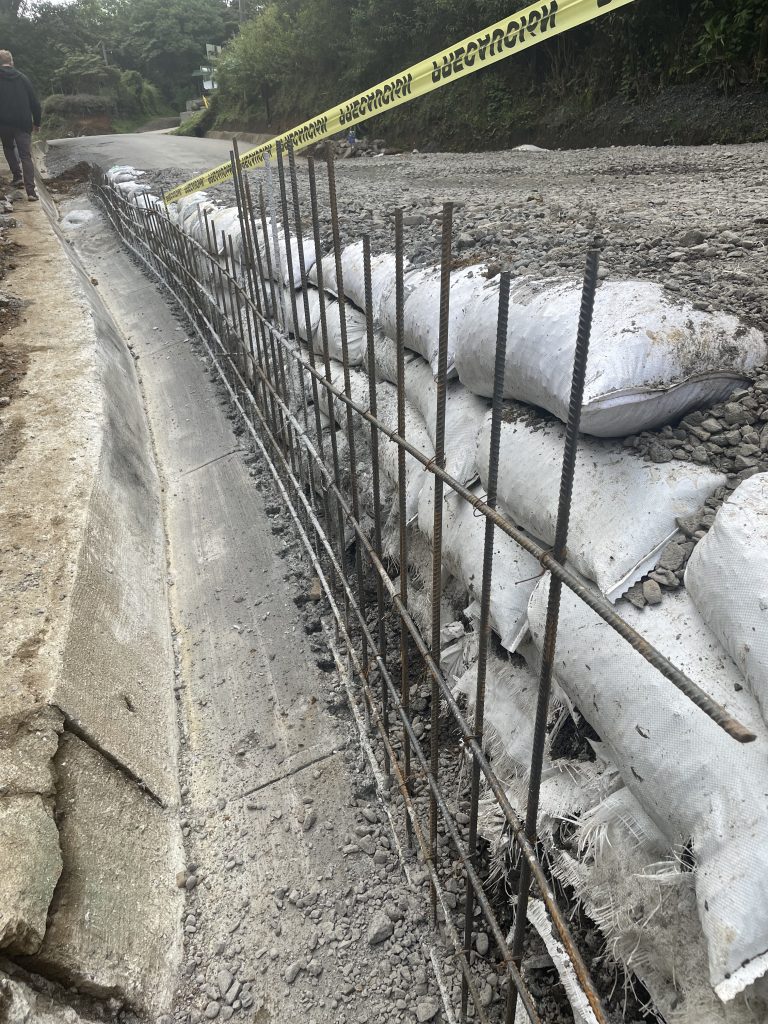
To keep the gravel ramps from immediately washing away in the rain, they filled sacks by hand with gravel and lined them up as temporary walls along the ramps.
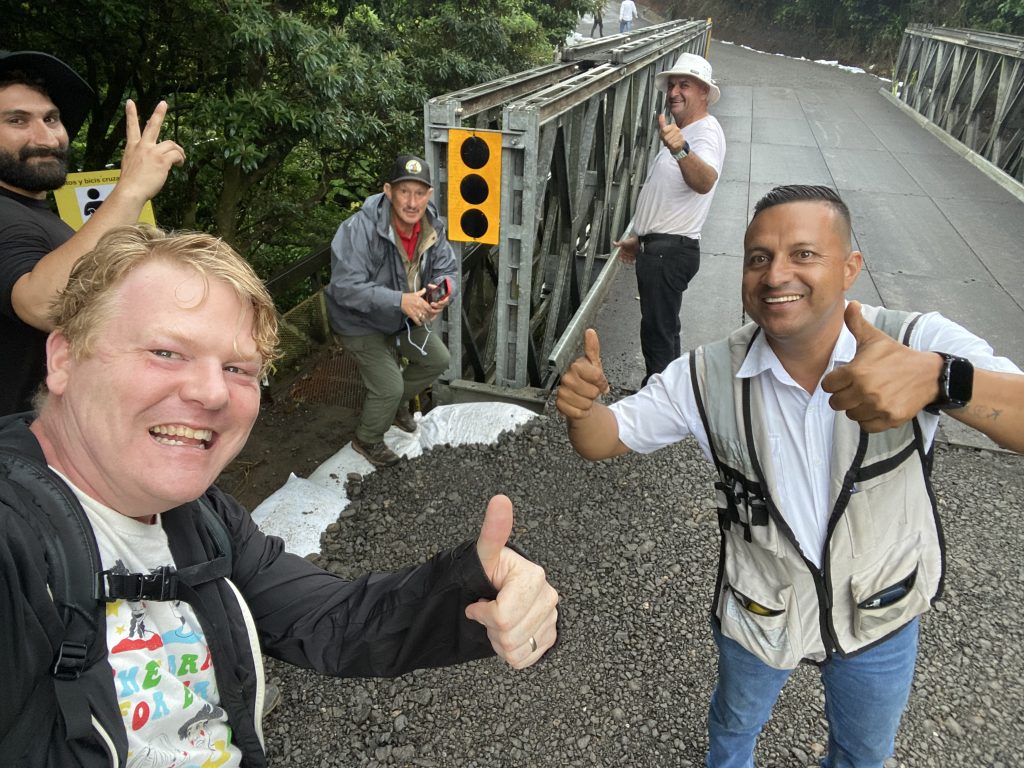
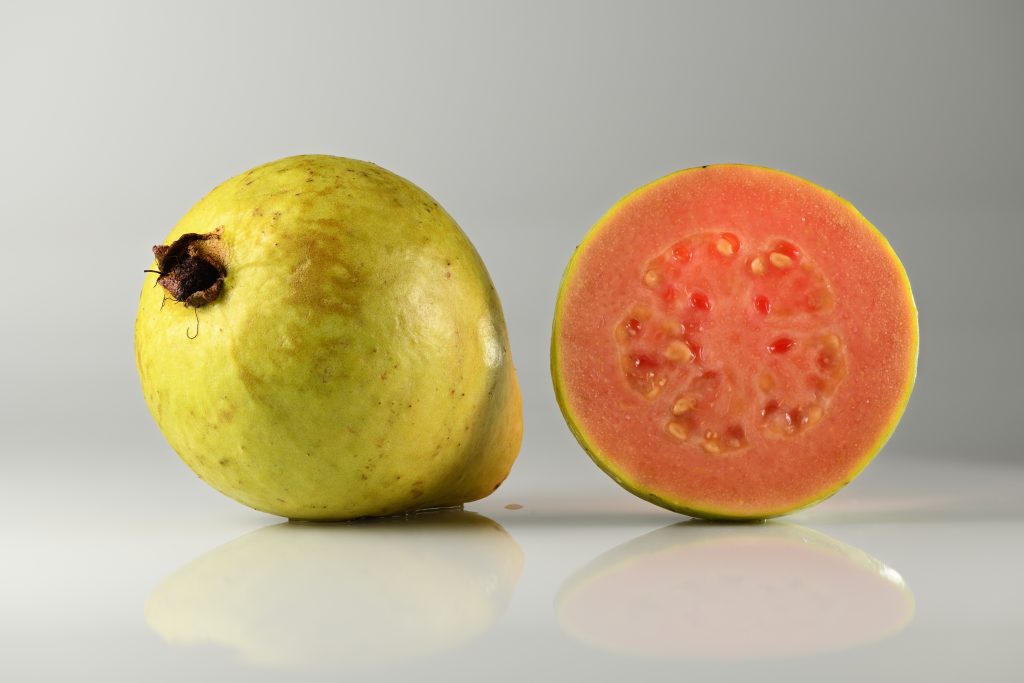
They called for volunteers to help with this labor-intensive step, and Pat went down to help and made some new friends! He also earned a true tico apodo (nickname): Guayaba! The person who gave him the name said he was rosadito (pink) like the fruit!
Guayaba fruit
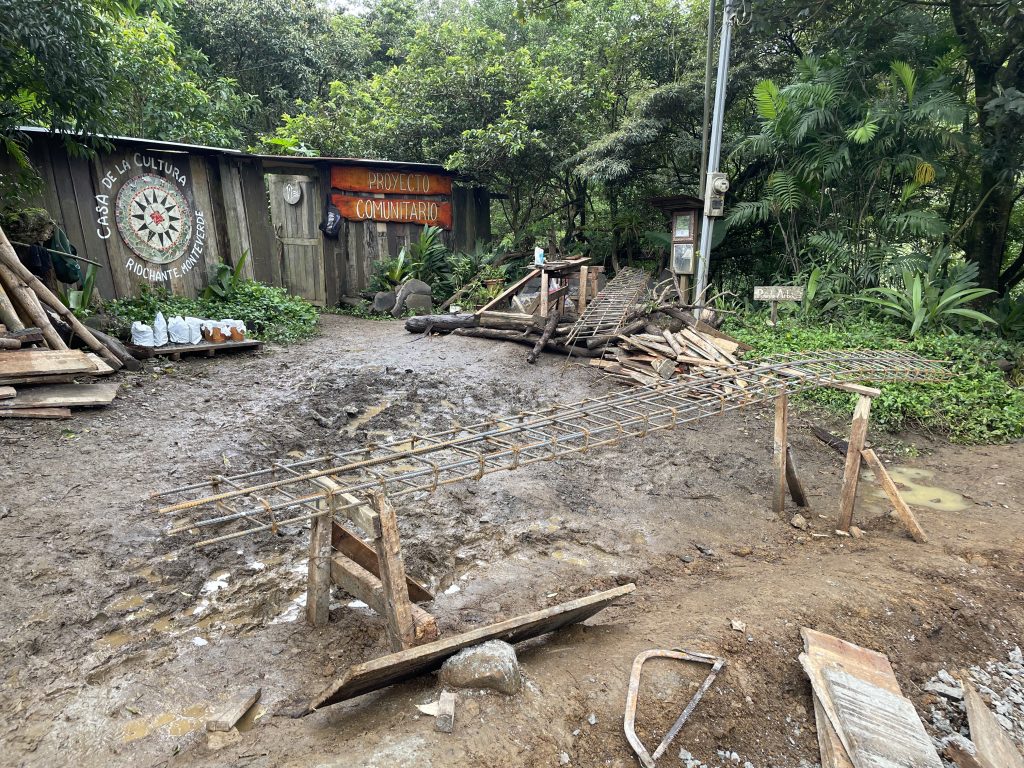
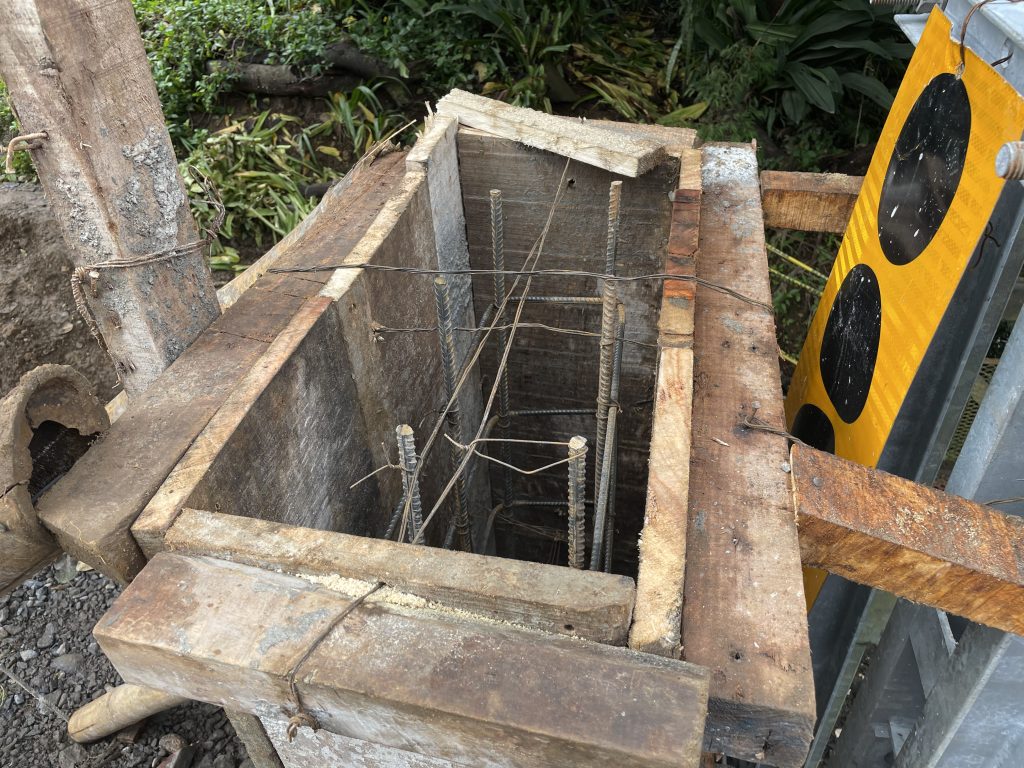
Several weeks later, another team of workers came to replace the bags of gravel with more permanent cement walls. First, they built a structure out of rebar to fit the size of the wall they are going to make.
Then they poured some concrete down and used it to set the rebar into place.
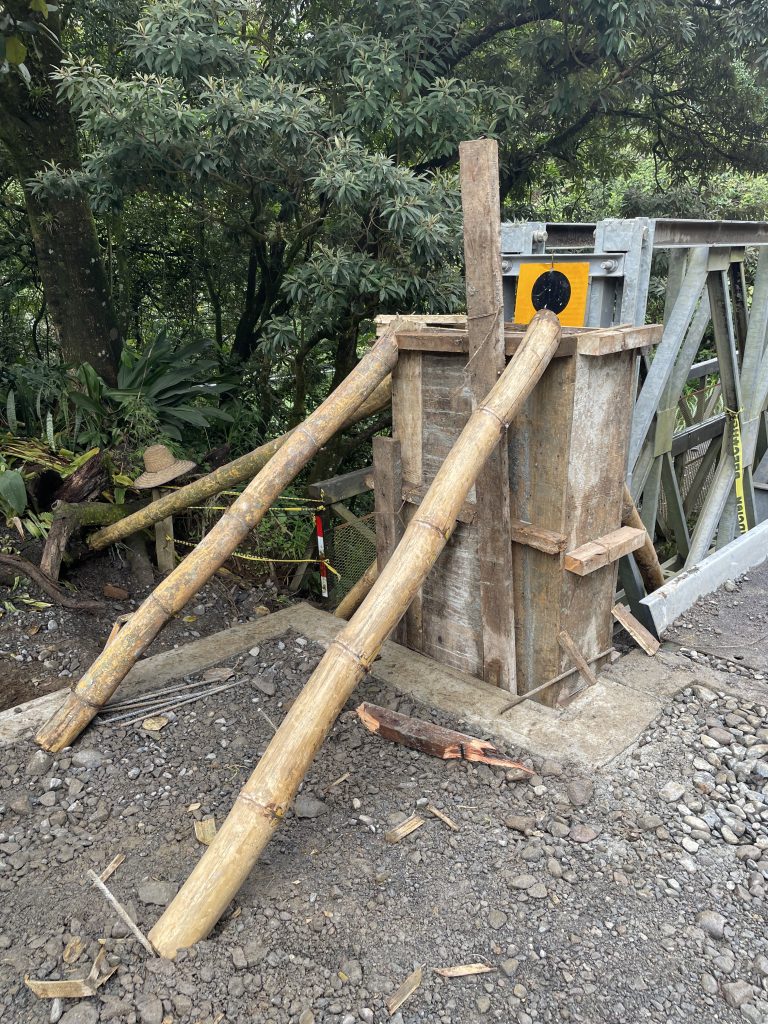
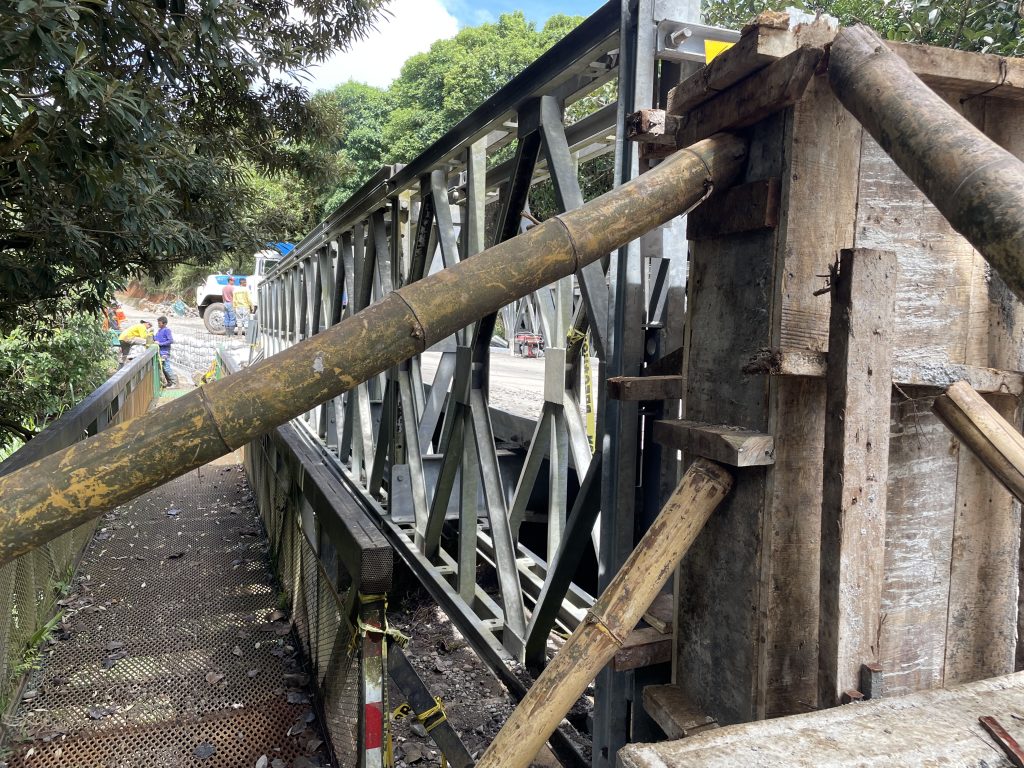
The next step is to pour the concrete. To get it to hold the shape they want, they built a mold out of wood, using a bunch of bamboo rods and 2x4s to hold it in place.
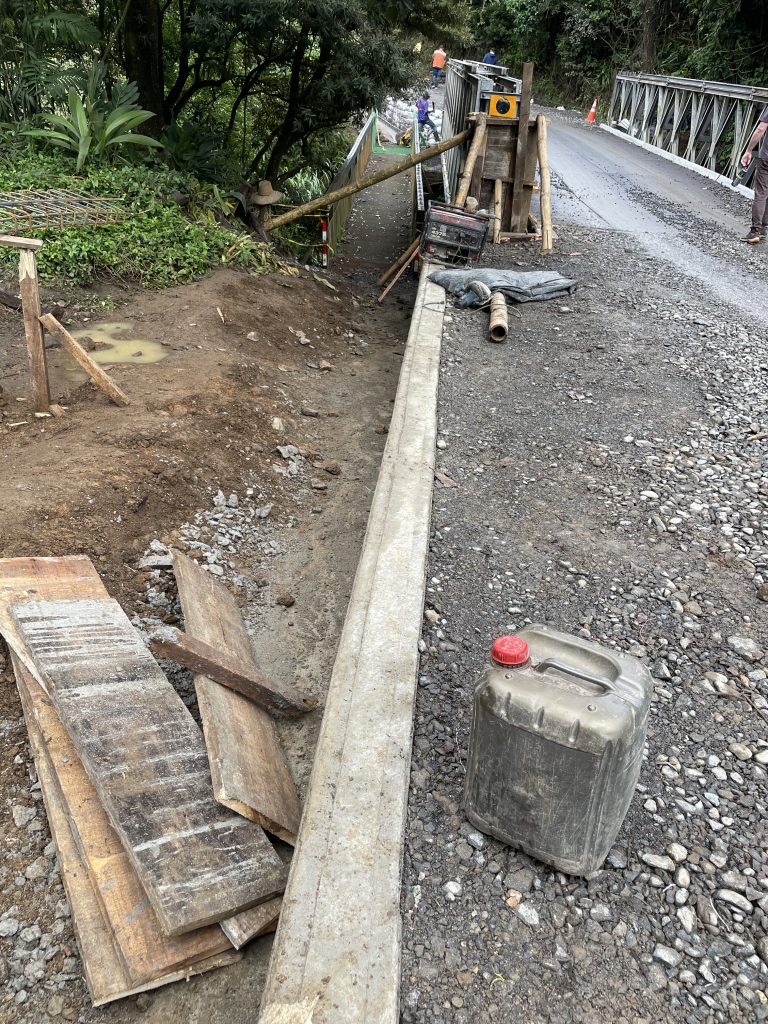
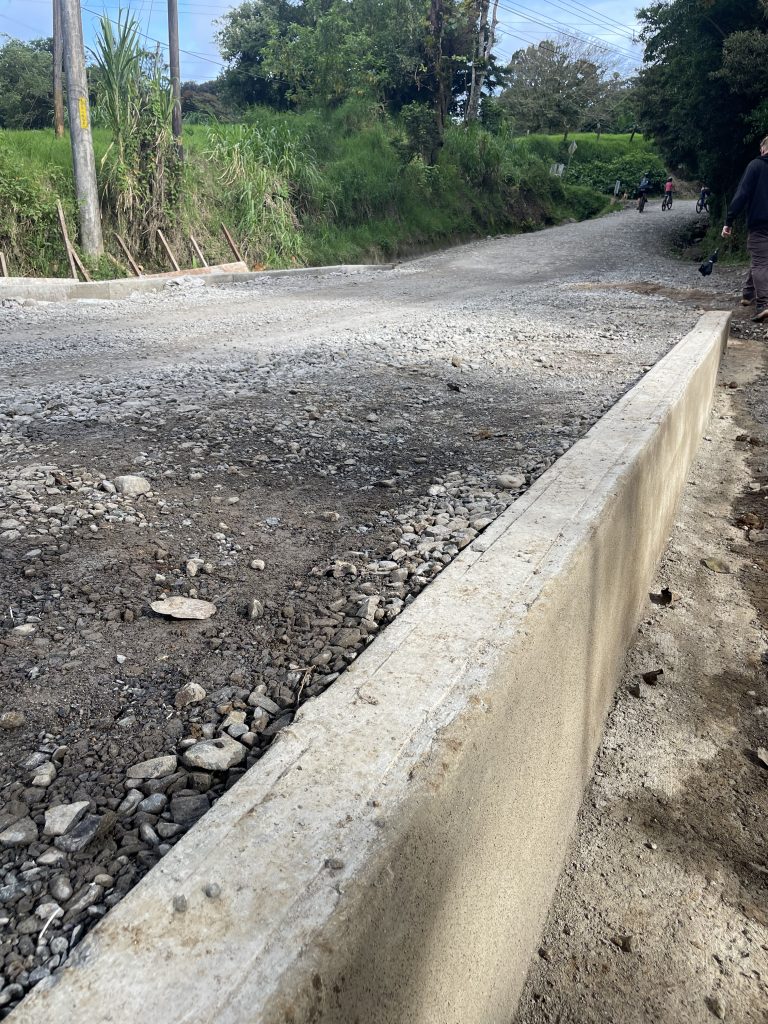
Once the cement is poured and hardened, they remove the molds, leaving concrete retaining walls that are much more permanent than the sacks of gravel. They are also building some more massive walls like this under the bridge to help protect the banks of the creek from erosion.
Despite the challenges of working during the rainy month of October and having to transport all the materials up the mountain, the new bridge is now almost finished!