There are between 600 and 700 distinct species of bees in Costa Rica, and after trying to learn a bit about them, I find myself with only more questions! One thing that stood out to me is just how many of the species are solitary instead of social: eighty percent!
It would take a melittologist to give you a full run-down of all these critters, but below I’ve added some images and a few facts I’ve learned about each variety.
Curi Cancha garden
One of the smaller nature reserves in Monteverde is a bee lover’s paradise, and it happens to be right next door to us. The reserve includes both secondary and primary growth forests, which are both worthy of their own posts, but one of my favorite spots is a beautifully tended garden surrounded by several beehives.
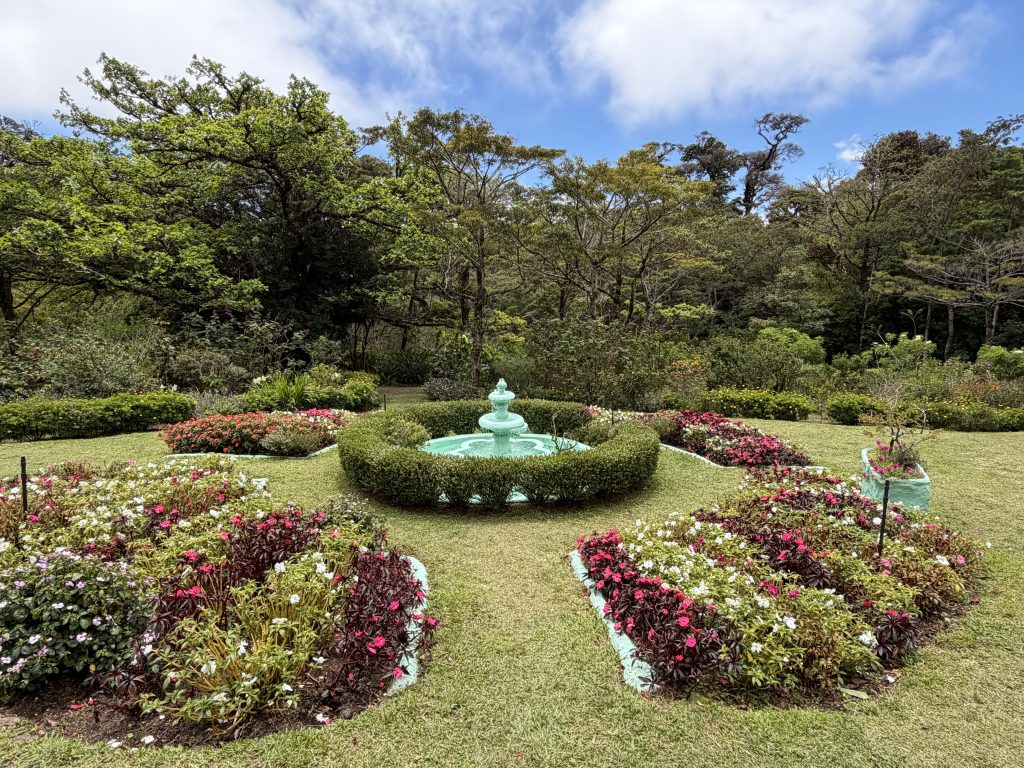
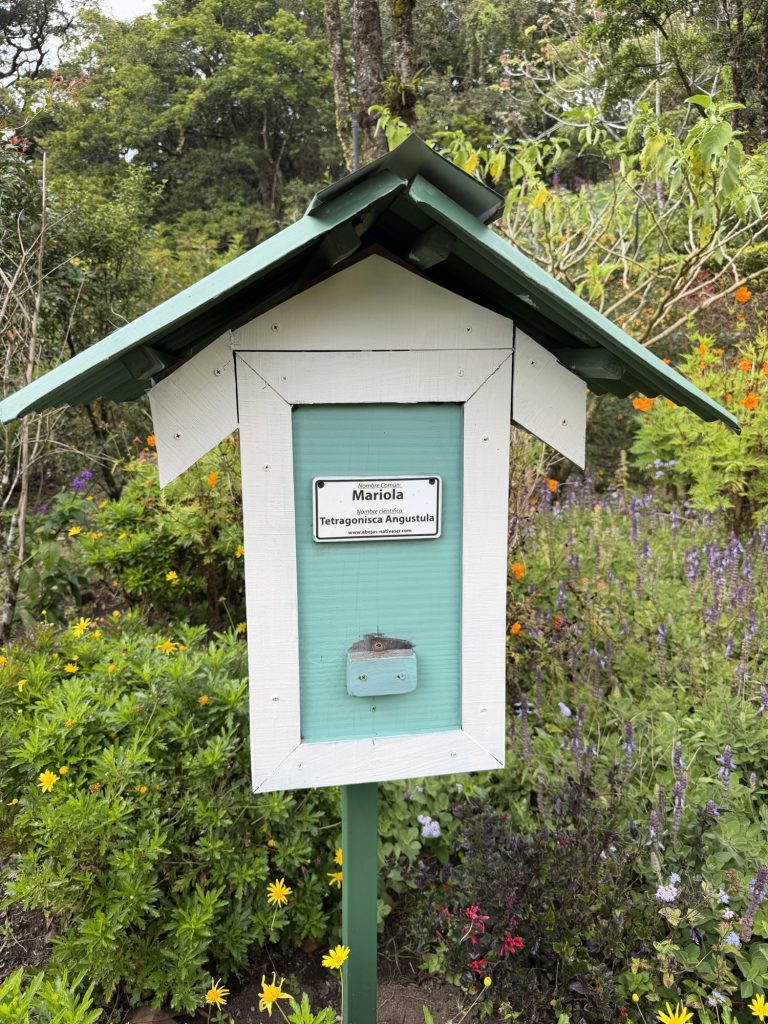
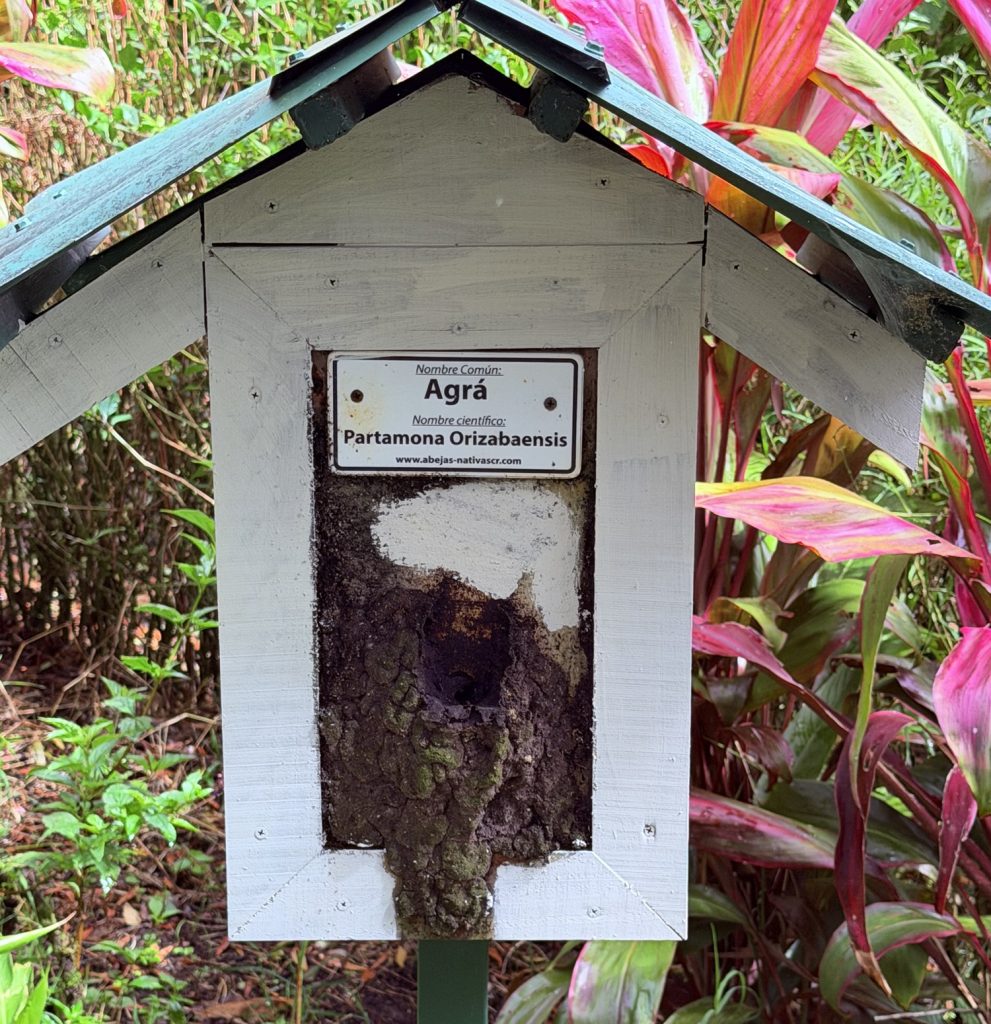
The garden has ten or so beehives around its perimeter, each hosting a different type of bee. Air Bee and Bees, as it were.
(I’ll show myself out.)
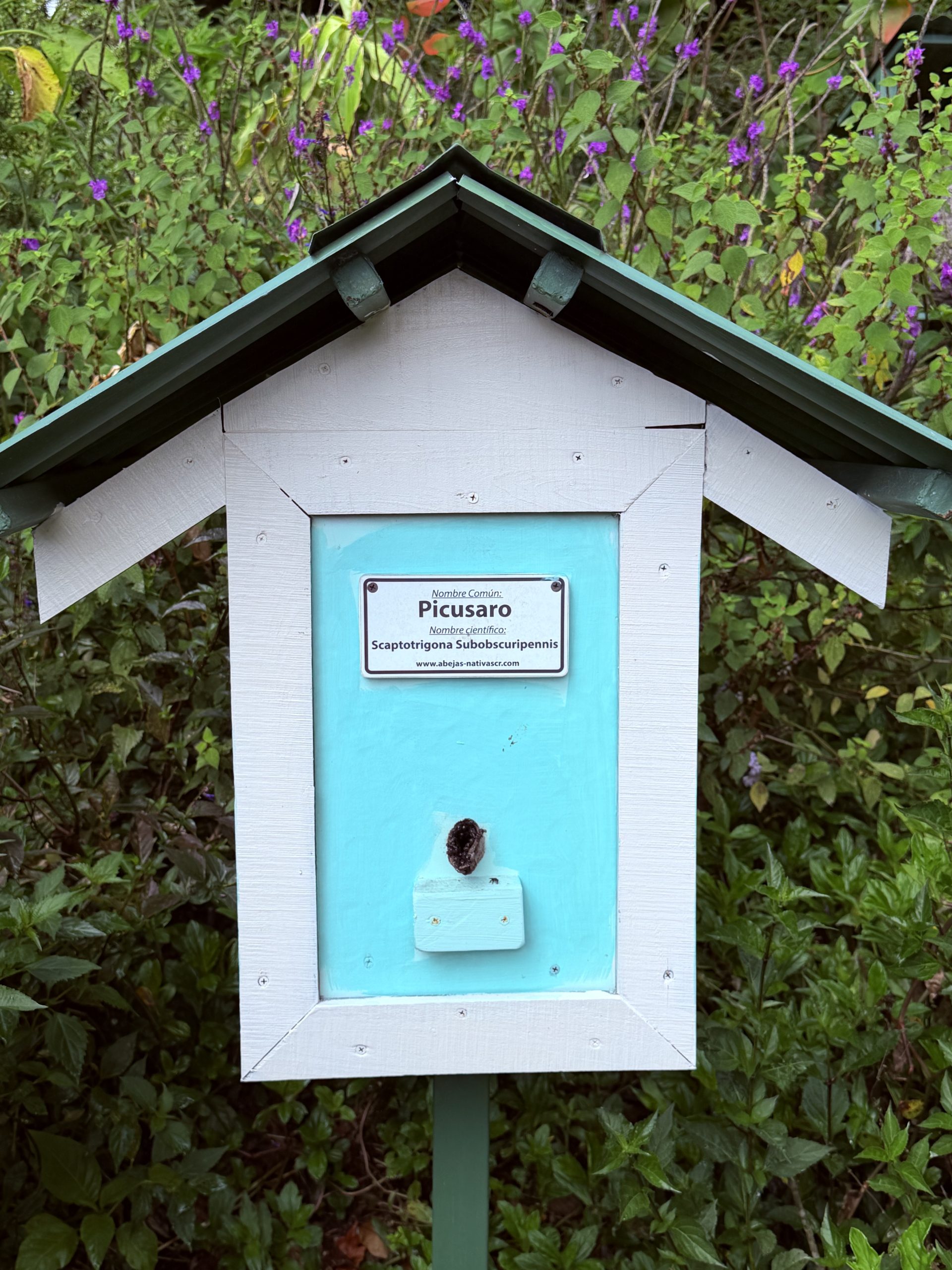
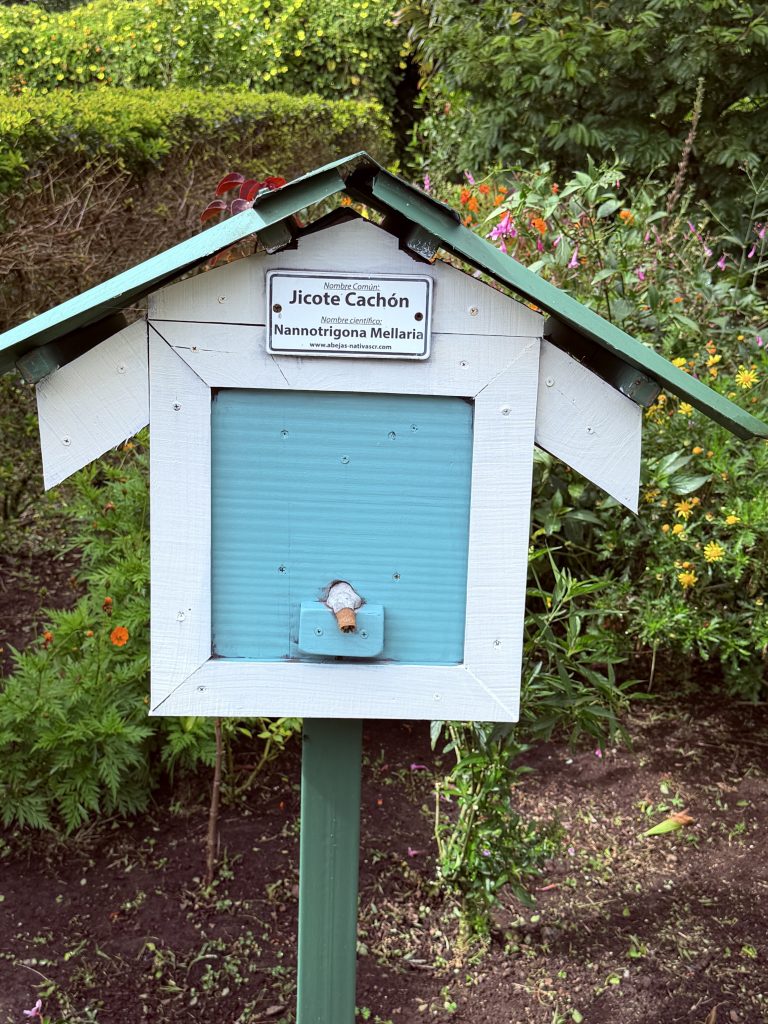
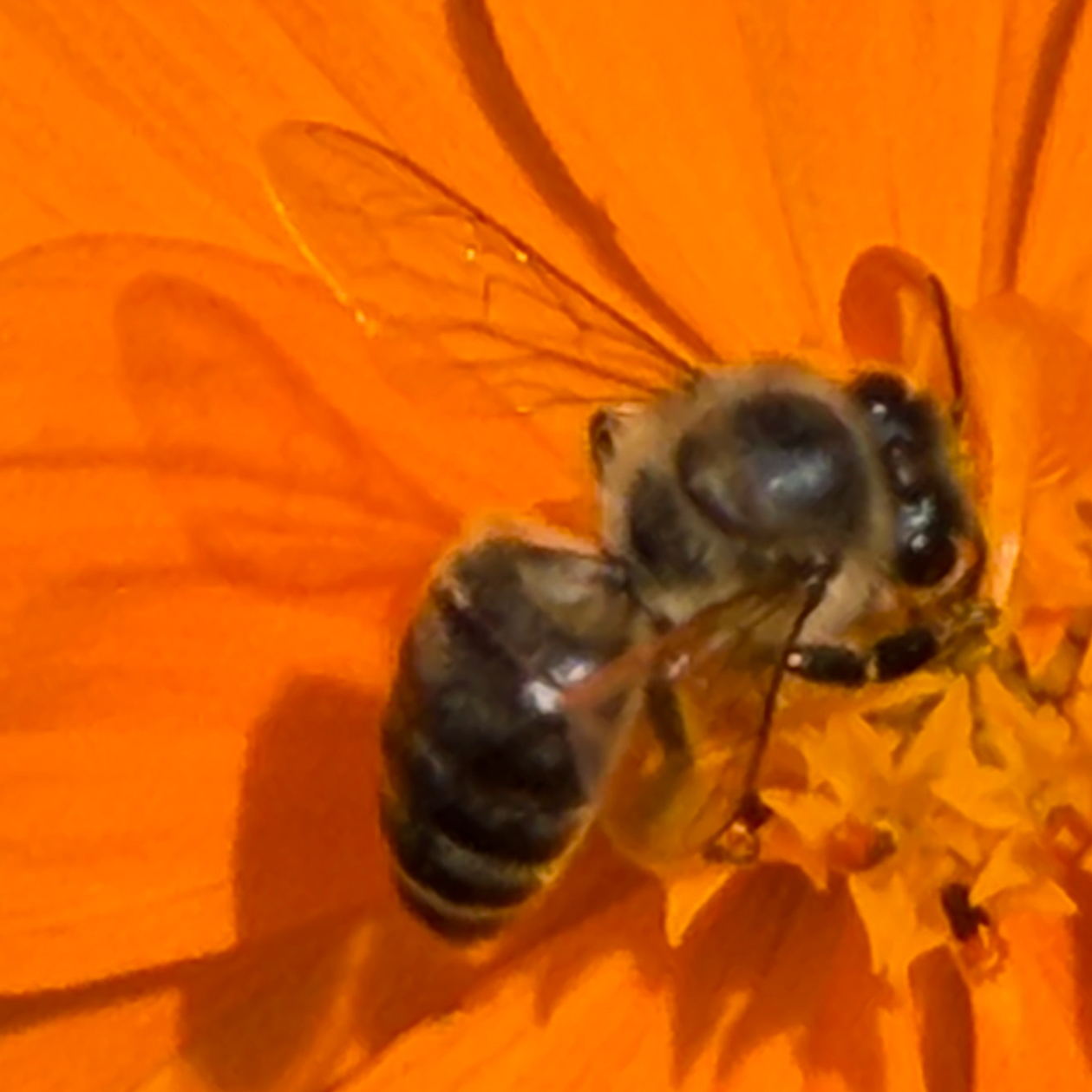
Apis mellifera, the European Honeybee
The familiar honeybee Apis mellifera is here (I mean, it’s everywhere), but that’s just the tip of the bee-berg.
Red-tailed Stingless Bee Trigona fulviventris
The first bee you’ll probably notice around here is one that some people call Red-tailed Stingless Bee, Trigona fulviventris. It doesn’t sting, but I’ve heard it can bite.
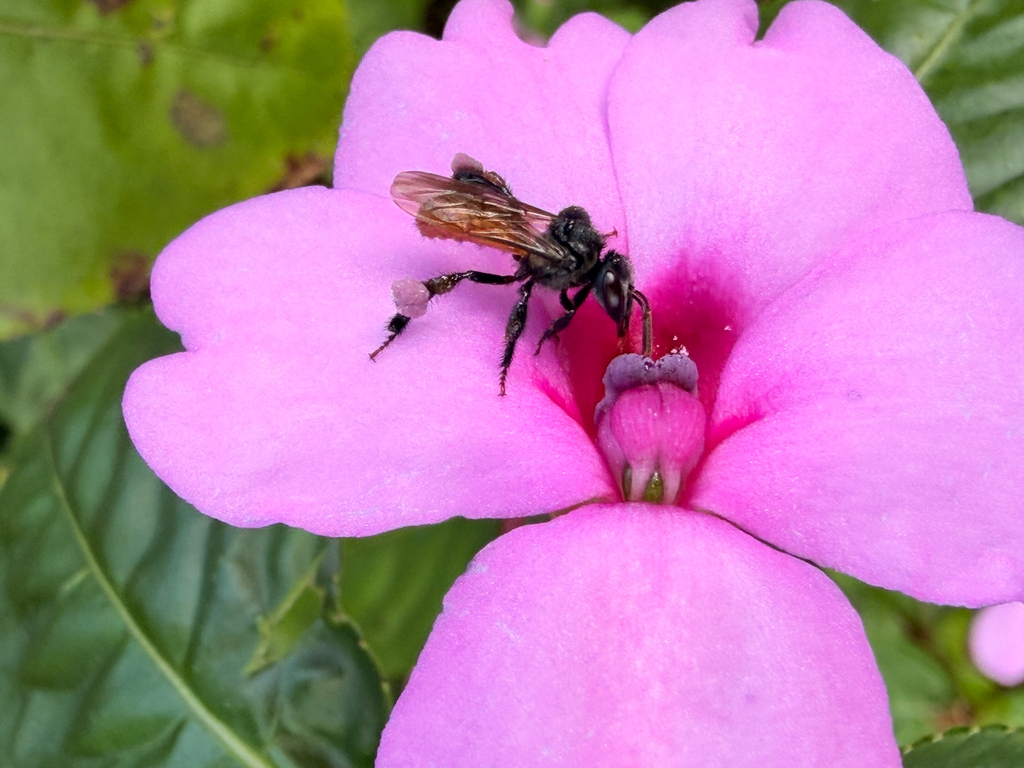
It mostly feeds on pollen and nectar.
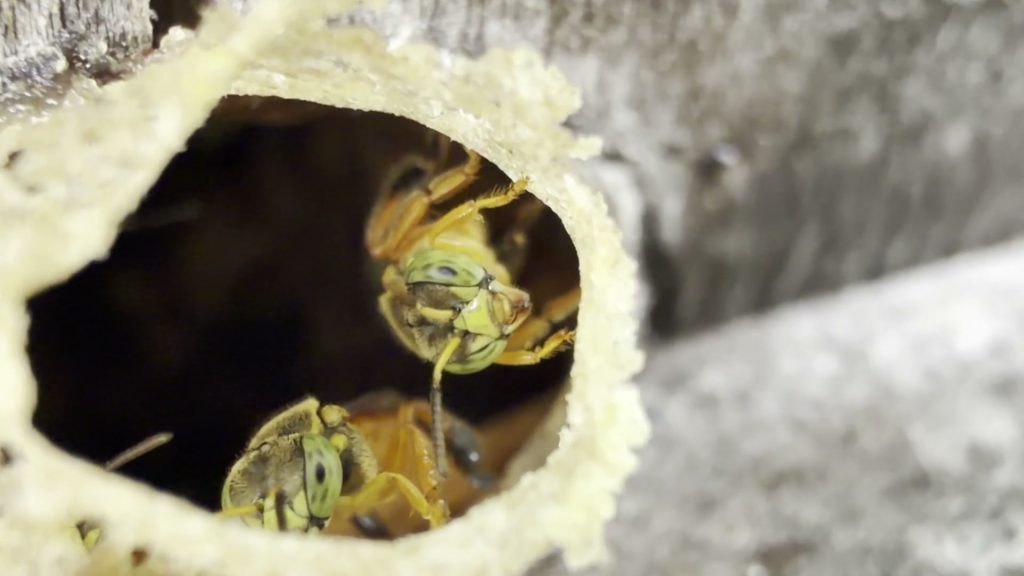
Tetragonisca angustula (Mariola stingless bee)
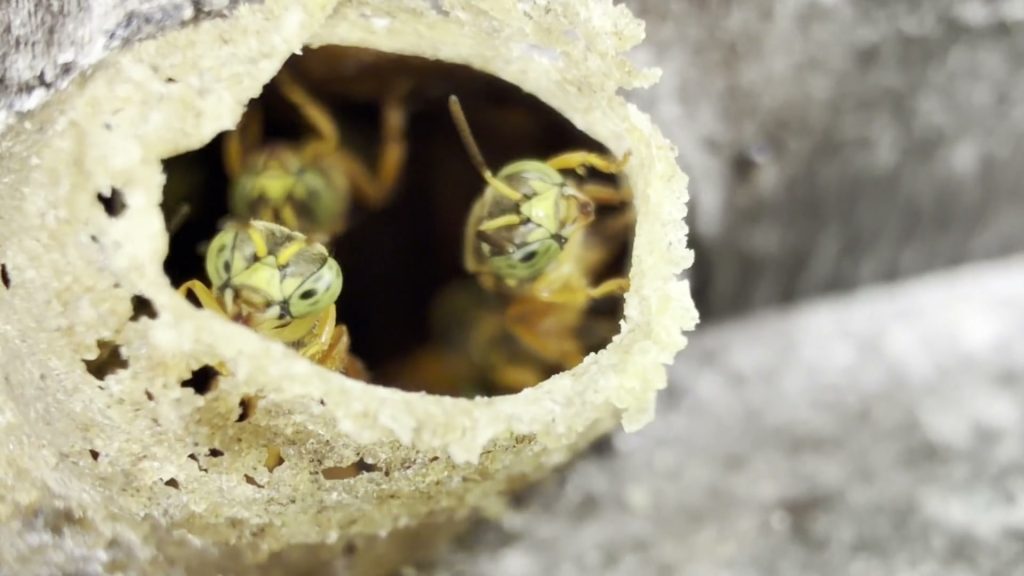
This is Tetragonisca angustula (Mariola stingless bee or just Mariola). It’s one of the. most famous Central American stingless bees, and is prized for its honey production. They are gentle and easy to photograph, since there are always guards at the entrance to the hive. I really like these guys.
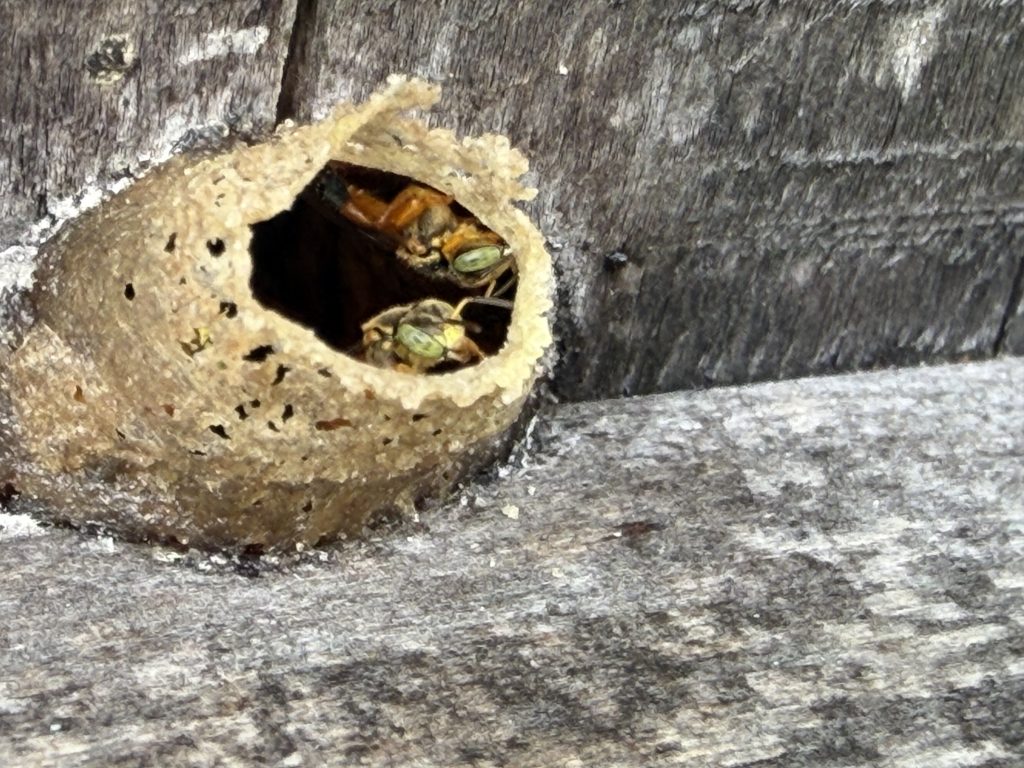
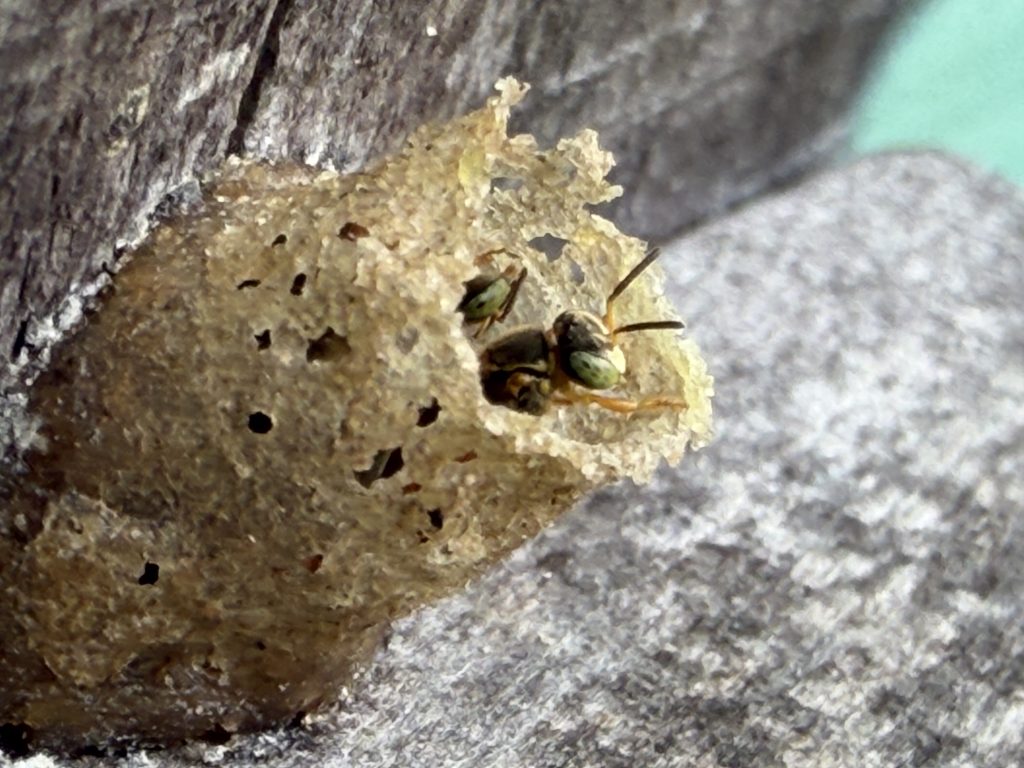
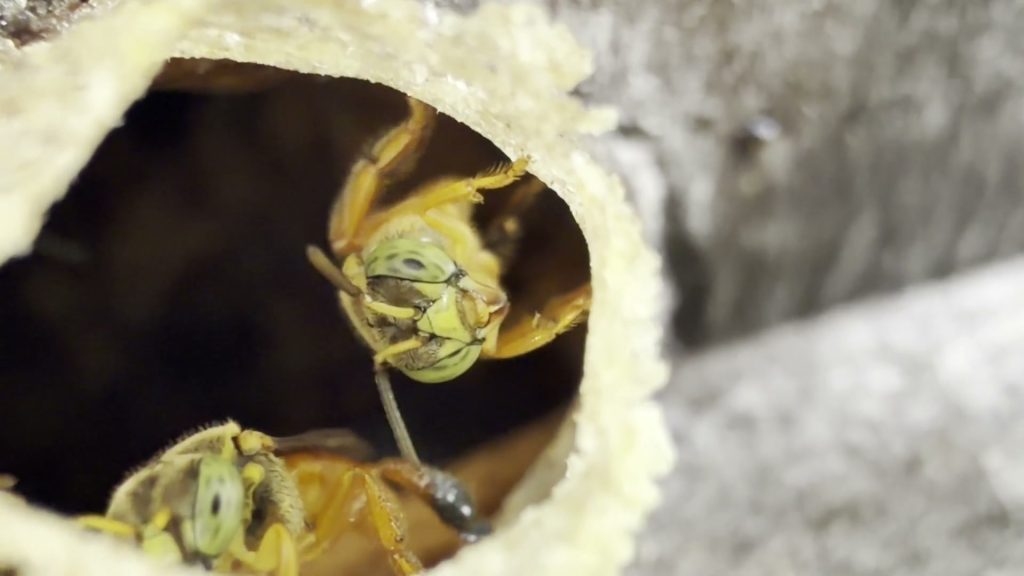
Nanotrigona mellaris
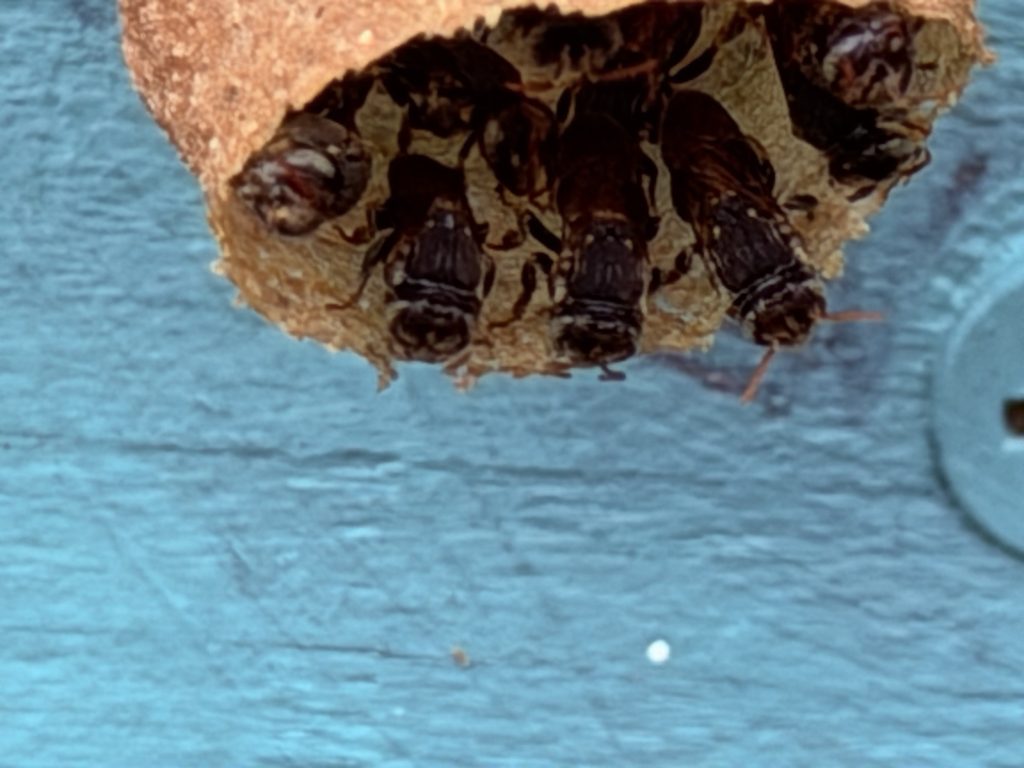
These teensy little guys make a teensy bit of honey. But they do their fair share of pollinating, especially small flowers.
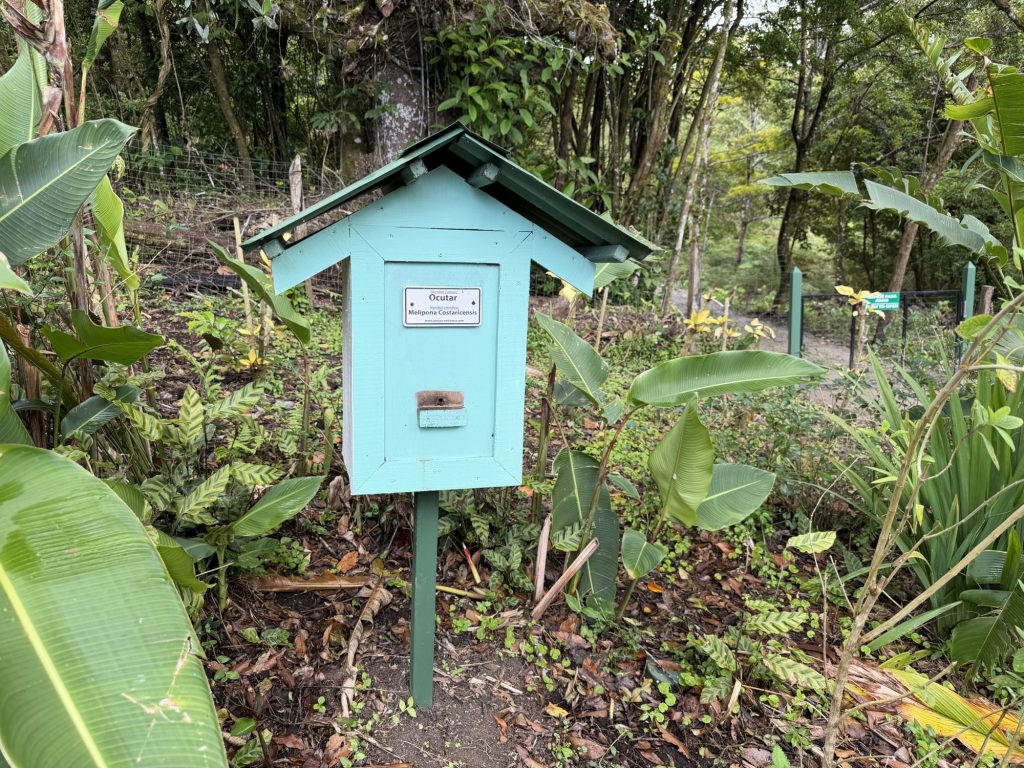
Melipona costaricensis — Ocutar
Melipona costaricensis is one of the larger stingless bees in Costa Rica. Their colonies can last for a long time—even years. The species also produces valuable honey, and is important as a pollinator, even if they’re not as pretty as Mariolas!
The Santa Elena Orchid Garden
I was surprised to learn about another category of bee when we visited the orchid garden in Santa Elena. It turns out that there’s a whole subcategory of bees which are exquisitely evolved to pollinate orchids, the Orchid Bees or Euglossini.
As we were walking through the garden and looking at a so-called hummingbird orchid (named for its shape, not its pollinator), the guide was telling us how certain species of orchid (specifically, the subtribes Stanhopeinae and Catasetinae) are pollinated by a single species of bee. As she was talking to us—lo and behold!—up flies a shiny little Exaerete smaragdina, going to town on the flower.
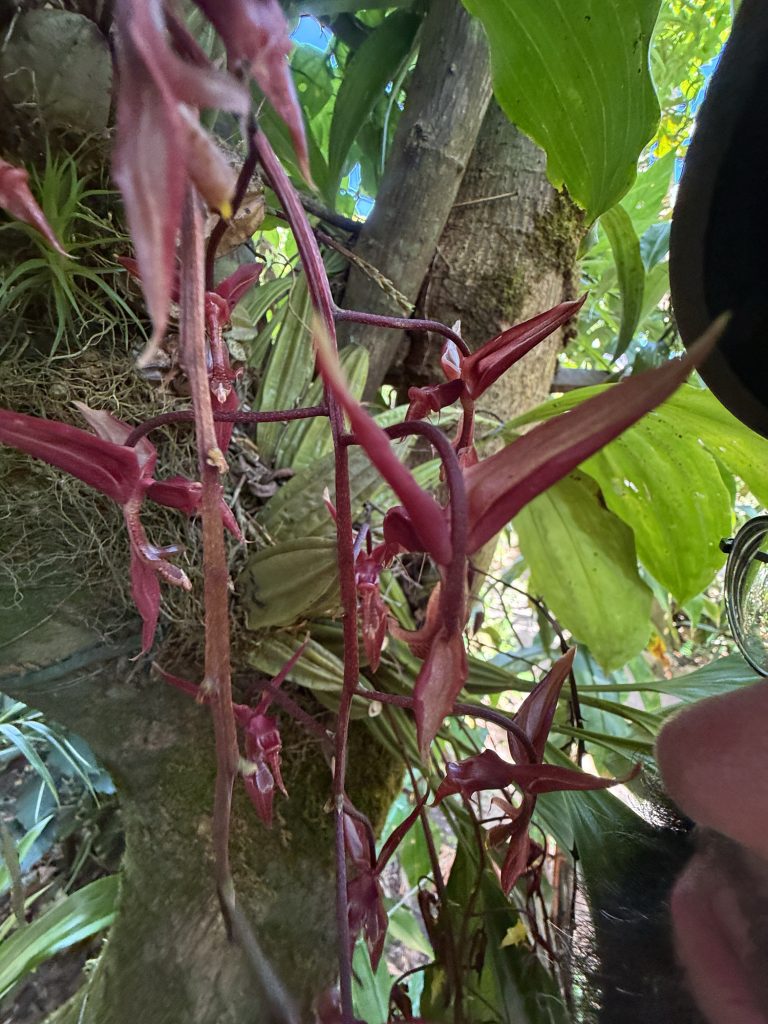
This is the “hummingbird orchid” the bee came to visit.
The guide was pretty amazed because she said that particular bee usually avoids humans, but it stayed right in front of us for several minutes, crawling around on the orchids and hovering in place. The blue color is quite amazing — to me it looked like a tiny machine.
Parting buzz
According to the UN, “Close to 35 percent of invertebrate pollinators, particularly bees and butterflies, and about 17 percent of vertebrate pollinators, such as bats, face extinction globally.” When you combine that with the fact that “more than 75 percent of the world’s food crops depend, to some extent, on pollination,” welp, we need to make sure our buzzy little friends stay in business.
I’ve been collecting info on how to plant pollinator plants in our yard when I get home, so I thought I’d share the list here!
Sources on planting pollinator-friendly gardens
- University of Minnesota Extension. Flowers for Pollinators.
https://extension.umn.edu/lawns-and-landscapes/flowers-pollinators - Mississippi State University Extension. How to Garden for Bees.
https://extension.msstate.edu/blogs/extension-for-real-life/how-garden-for-bees - University of Arizona Cooperative Extension. Pollinators in the Garden.
https://extension.arizona.edu/sites/extension.arizona.edu/files/attachment/Pollinators_0.pdf - University of New Hampshire Extension. Supporting Bees in Your Yard or Garden.
https://extension.unh.edu/blog/2021/06/celebrating-pollinator-week-supporting-bees-your-yard-garden-audio - USDA. The Importance of Pollinators.
https://www.usda.gov/about-usda/general-information/initiatives-and-highlighted-programs/peoples-garden/importance-pollinators - U.S. Forest Service. Gardening for Pollinators.
https://www.fs.usda.gov/managing-land/wildflowers/pollinators/gardening - Xerces Society for Invertebrate Conservation. Pollinator-Friendly Plant Lists.
https://xerces.org/pollinator-conservation/pollinator-friendly-plant-lists